8 November 2024
Snorkelling offers a magical window into the underwater world, allowing us to observe marine life in its natural habitat. But to truly make the most of this experience, it’s essential to have the right gear and knowledge.
This article will help guide you towards a snorkelling adventure that is both enjoyable and respectful of the delicate marine environment. In addition to researching the excursion and interacting with wildlife, we also look at the fundamentals underpinning underwater exploration: choosing the right equipment and mastering basic snorkelling techniques.
Finding the best snorkelling spots
Researching marine life hotspots
To maximize your chances of encountering fascinating marine life, it’s worth investing some time in researching potential snorkelling locations. Online snorkelling resources, guidebooks, and local experts can be invaluable sources of information.
Look for areas known for their biodiversity, such as coral reefs, kelp forests, or seagrass meadows. These habitats provide food and shelter for a wide range of marine creatures, increasing your chances of exciting encounters.
When researching potential locations, pay attention to factors like water clarity, accessibility, and any potential hazards, such as strong currents or boat traffic.
Local dive shops or tour operators can often provide valuable insights into the best snorkelling spots in the area and any specific considerations for each location.
Considering water conditions
Calm, clear waters with good visibility are ideal for observing marine life and enjoying the underwater scenery. Before heading out, check the weather forecast and tide charts to ensure favourable conditions.
Windy conditions can create choppy water, making it difficult to snorkel comfortably and reducing visibility. Similarly, strong currents can make it challenging to stay in one spot and observe marine life, and can even pose a safety risk for inexperienced snorkelers. Tidal changes can also affect water clarity and current strength, so it’s important to be aware of these fluctuations.
Ideally, choose a day with calm seas, light winds, and good visibility. This will allow you to relax and focus on enjoying the underwater world without battling challenging conditions.
Snorkelling safety tips
Snorkelling safety should always be a top priority. Even in calm, shallow waters, it’s important to take precautions to ensure a safe and enjoyable experience.
Always snorkel with a buddy. Having someone nearby who can assist in an emergency or with unexpected difficulty is a good strategy. Inform someone on shore of your snorkelling plans, including your intended location and estimated return time. This way, if you encounter any problems, someone will know where to look for you.
Stay aware of your surroundings. Be mindful of boat traffic, strong currents, and any potential hazards in the area. Avoid snorkelling alone in remote locations or in conditions that exceed your skill level.
Basic snorkelling techniques
Mastering a few basic snorkelling techniques can greatly enhance your comfort, safety, and enjoyment in the water.
Breathing and clearing your snorkel
Breathing through a snorkel might feel a little unnatural at first. The key is to breathe slowly and deeply through your mouth, keeping your jaw relaxed.
It’s also important to know how to clear your snorkel in case water splashes in or you accidentally dive below the surface. To do this, simply exhale sharply through the snorkel. The force of your exhalation will push the water out of the tube, allowing you to resume breathing normally.
Mastering finning techniques
Efficient finning is crucial for conserving energy and moving gracefully through the water. The most effective finning technique for snorkelling is the flutter kick. This involves keeping your legs relatively straight and kicking from your hips, generating a smooth, rhythmic motion that propels you forward. Avoid bending your knees excessively or kicking too hard, as this can create unnecessary drag and waste energy.
Another important aspect of finning is being mindful of your surroundings. Avoid kicking up sand or sediment from the seabed, as this can disturb marine life and reduce visibility for both you and other snorkelers. Practising your finning technique in a pool or shallow water can help you develop a smooth and controlled kick before venturing into deeper areas with marine life.
Equalising ear pressure
As you descend underwater, the increasing pressure can cause discomfort or even pain in your ears. This is because the pressure inside your middle ear needs to equalise with the surrounding water pressure. To do this, you’ll need to perform an ear equalisation technique, also known as “clearing your ears.”
The most common method for equalising ear pressure is to pinch your nostrils closed and gently blow. It’s important to equalise frequently as you descend, especially in deeper water. If you feel any discomfort, stop descending and ascend slightly until you can clear your ears comfortably.
Responsible wildlife interactions
When encountering marine life, it’s crucial to interact responsibly to ensure both your safety and the well-being of the creatures you observe.
Maintain a safe distance. Avoid touching or chasing any creatures, as this can cause them stress and disrupt their natural behaviour. Remember that you are a guest in their environment, and it’s important to respect their space.
Never feed marine animals. Feeding wildlife can alter their natural feeding habits and create a dependence on humans for food. It can also lead to aggression towards humans and disrupt the delicate balance of the ecosystem.
Avoid wearing shiny jewellery or brightly coloured clothing that might attract unwanted attention from curious or territorial animals. Choose muted colours that blend in with the natural environment.
If you encounter a potentially dangerous creature, such as a jellyfish or a venomous fish, it goes without saying that you should keep your distance and admire it from afar.
Identifying common marine life
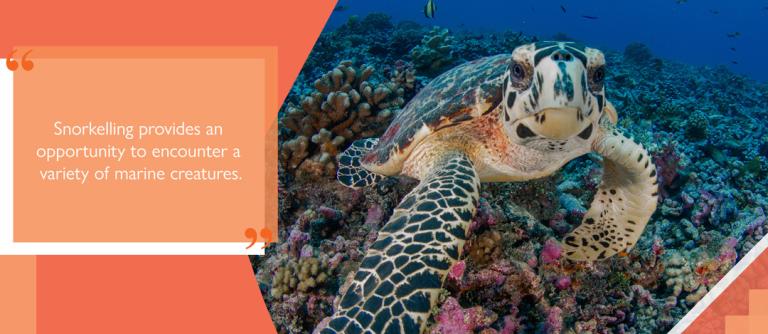
One of the most exciting aspects of snorkelling is the opportunity to encounter a variety of marine creatures. What you can expect to see will vary based on location, particularly between tropical locations, reef regions and areas closer to home. However, familiarity can enhance your appreciation for the underwater world and help you identify those special sightings.
Some fish species snorkellers may see (depending on location):
- Parrotfish: These colourful fish are named for their beak-like mouths, which they use to graze on algae and coral.
- Angelfish: Known for their graceful movements and vibrant colours, angelfish are a common sight on coral reefs. However, they can be territorial.
- Butterflyfish: These small, brightly coloured fish are often seen in pairs, flitting among the coral. They are named for their wing-like fins, which they use to manoeuvre precisely.
Other fascinating marine creatures
- Sea turtles: These gentle giants are a highlight for many snorkellers, but it’s important to observe them from a respectful distance.
- Rays: These graceful creatures glide through the water, often camouflaged against the seabed. Rays are generally harmless, but it’s best to avoid touching them, as some species have venomous barbs on their tails.
- Crustaceans: Crabs, lobsters, and shrimp play important roles in the marine ecosystem, scavenging for food and contributing to nutrient cycling. They are often found hiding in crevices or under rocks, so keep an eye out for their movements.
Protecting our oceans
As snorkellers, we have a responsibility to protect the delicate ecosystems we explore. Here are a few ways you can contribute to marine conservation:
- Choose reef-safe sunscreen: Conventional sunscreens often contain chemicals that can harm coral reefs and other marine life. If you plan to explore a reef, opt for reef-safe sunscreens that are formulated with environmentally friendly ingredients.
- Dispose of rubbish properly: Never litter in the ocean or on the beach. Dispose of all waste properly in designated bins or take it home with you. Even seemingly small items like cigarette butts or plastic wrappers can have a detrimental impact on marine life.
- Never remove anything from the marine environment: Resist the temptation to take home souvenirs like shells, coral fragments, or other marine life. These items play important roles in the ecosystem and should be left undisturbed.
- Support organisations dedicated to marine conservation: Consider donating to or volunteering with organisations that are working to protect our oceans.Your support can help fund research, education, and conservation efforts that benefit marine life and their habitats.
- Educate yourself and others: Learn about the challenges facing our oceans and share your knowledge with others. Encourage friends and family to adopt responsible snorkelling practices and become stewards of the marine environment.
Choosing the right snorkelling gear
Having the right equipment can significantly enhance your snorkelling experience. It’s not just about comfort (though that’s important); it’s also about safety and maximising your ability to observe marine life without causing disturbance.
Two Bare Feet’s selection of snorkelling gear for beginners and experienced underwater adventurers provides the level of quality and reliability you need to ensure your safety and comfort.
Dive mask
Choosing the right dive mask can be the difference between a truly immersive experience and a frustrating one. A poorly fitting mask will leak, requiring you to resurface and readjust, interrupting your observation of marine life and potentially disturbing the environment.
Two Bare Feet offers a range of high-quality diving masks designed with comfort and functionality in mind. Whether you’re an experienced diver or a beginner, the masks are crafted to provide a secure fit and clear visibility, enhancing your underwater experience.
The collection includes both silicone and PVC models, each tailored to different preferences. For those engaging in shorter snorkelling sessions or are new to the activity, Two Bare Feet’s PVC dive masks are offered as part of a two-piece diving set, with a snorkel, or a three-piece diving set with a snorkel and fins. Both offer excellent value when getting started.
Our PVC masks feature a durable skirt that provides a comfortable fit and secure seal. While slightly firmer than silicone, PVC is still flexible enough to form a reliable barrier against water ingress, ensuring you can enjoy your snorkelling session with minimal interruptions.
Two Bare Feet’s silicone dive masks are available separately as well as part of our great value dive sets. These masks use a soft silicone skirt that moulds easily and comfortably to the contours of your face, creating a watertight seal that helps prevent leaks. This tight seal ensures that you can focus on exploring marine life without constantly resurfacing to adjust your mask. Additionally, silicone is highly durable, resistant to wear, and hypoallergenic, making it suitable for sensitive skin and long-lasting use.
Both types of masks are equipped with tempered glass lenses, offering clear, undistorted vision underwater. The lenses are scratch-resistant and designed to withstand pressure changes during deeper dives, providing a dependable viewing experience. Adjustable straps further enhance comfort by allowing for a customised fit, while a reliable nose pocket ensures water will not enter your nose.
Preventing mask leaks
Ensuring a proper mask seal is crucial for a dry and enjoyable snorkelling experience. Here’s how to achieve a snug, watertight barrier:
Check the fit: When first trying on your mask, ensure the skirt creates a good seal by conforming to your face shape. A mask that doesn’t fit correctly will inevitably leak when underwater.
Keep it clean and dry: Before putting on your mask, make sure your face is clean and dry. Lotions, oils, or even sunscreen can hinder a good seal, causing the skirt to slip and allow water to seep in. Pay close attention to areas like under your nose and around your eyes, where leaks commonly occur.
Smooth out wrinkles: Even small wrinkles around your eyes or smile lines can create tiny gaps that lead to leaks. Gently smooth out these areas when applying the mask to help create a tight seal.
Snorkel
The snorkel is your lifeline to the surface, providing a constant flow of fresh air while you explore the underwater realm. A good snorkel should be comfortable to breathe through and easy to clear if water accidentally enters the tube.
Two Bare Feet’s snorkel range includes both standard silicone snorkels and dry top snorkels, each offering unique benefits depending on your needs. The standard silicone snorkles are crafted rom flexible and durable silicone, providing a comfortable fit around the mouth. The soft mouthpiece reduces jaw fatigue during extended use, making it easier to enjoy long snorkelling sessions without discomfort.
These snorkels also feature a wide, curved tube that allows for easy breathing and efficient airflow, enhancing your overall experience. They also feature reliable purge valves as standard, which allow you to quickly expel any water that gets into the snorkel with a sharp exhalation.
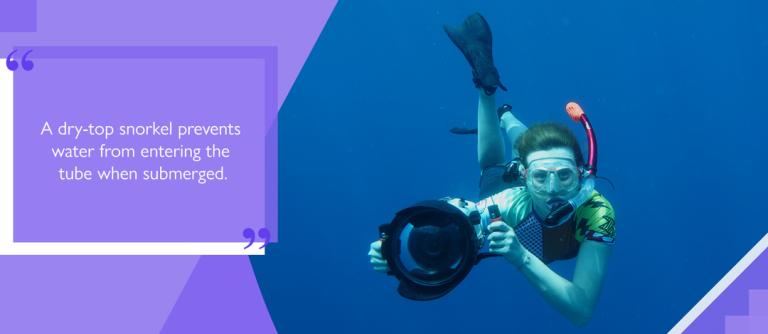
For those seeking extra protection against water entering the snorkel, Two Bare Feet’s dry top snorkels offer a more advanced solution. The dry top mechanism automatically seals off the top of the snorkel when submerged, preventing water rom entering even during dives or when swimming through waves. This makes dry top snorkels an excellent choice for those who want to explore deeper waters or who prefer added security in rougher conditions.
Like the standard models, dry top snorkels also come with comfortable silicone mouthpieces and purge valves for easy clearing.
Dive fins
Fins (flippers) provide the propulsion you need to move effortlessly through the water, conserving energy and allowing you to cover greater distances. This means you can spend more time exploring different areas and encountering a wider variety of marine life.
Choosing the right diving fins for snorkelling can greatly enhance your snorkelling experience. Our snorkelling sets come with two choices, designed to suit different needs and conditions.
The F70 fins are a versatile option, offering a balance between power and flexibility with blades that help deliver strong propulsion with each kick, allowing you to cover distances with minimal effort. The F70 fins are ideal for those who want to explore deeper waters or need reliable thrust in challenging conditions.
The F52 fins are similar in size and shape to the F70 fins, but also feature cutaway holes designed to reduce water resistance. This translates to less power per kick, but also less overall effort, making them easy to swim in, and very beginner friendly.
Two Bare Feet’s F99 fins are also a favourite among snorkellers. With a shorter-length, stiffer blade that offers a mix of power and agility in bursts, they’re perfect for exploring reefs and navigating tight spaces.
All our fins are designed to be worn barefoot. However, the F70 and F52 models can be worn with wetsuit socks, if required.
Other essential snorkelling gear
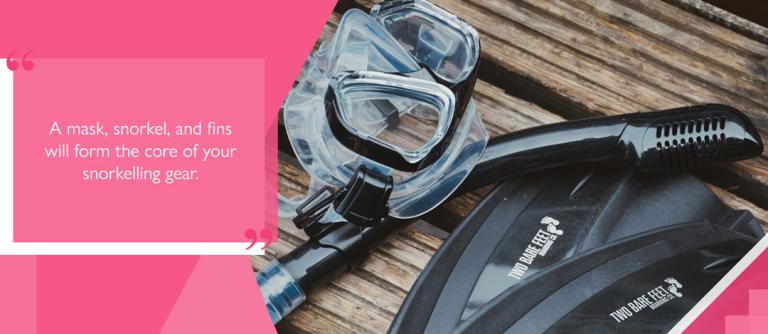
While the mask, snorkel, and fins form the core of your snorkelling gear, a few additional pieces of kit will further enhance your comfort and safety, especially in varying water temperatures and conditions.
Wetsuit
A wetsuit is your second skin in the water, providing essential thermal insulation that allows you to comfortably explore cooler waters for longer durations. Even in seemingly warm climates, prolonged exposure to water can lead to a drop in body temperature, which can be uncomfortable and even dangerous.
Two Bare Feet can help with choosing a wetsuit for snorkelling. We offer a wide range in varying thicknesses to suit different water temperatures. All our neoprene wetsuits offer excellent flexibility and freedom of movement alongside their insulating properties. This flexibility is crucial for comfortable swimming and effortless interaction with the underwater environment.
For cooler waters, a thicker wetsuit, such as our 4/3 Thunderclap winter wetsuit, provides the necessary warmth, while for warmer conditions, a thinner wetsuit like the 3/2 Thunderclap Pro offers a balance of insulation and flexibility.
Other gear to consider
Rash vest: An additional layer of protection against the sun’s harmful UV rays, preventing sunburn and reducing the risk of long-term skin damage. Also helps prevent chafing and irritation.
Neoprene gloves and socks: An extra layer of insulation for your hands and feet, allowing you to comfortably explore cooler waters without sacrificing dexterity.
Taking the plunge with confidence
Snorkelling with marine life is a truly enriching experience that connects us with the beauty and diversity of the underwater world. By choosing the right gear, mastering basic techniques, and following responsible practices, you can embark on a safe and rewarding snorkelling adventure that leaves a positive impact on the marine environment.
Explore Two Bare Feet’s range of snorkelling gear to find the perfect equipment for your underwater explorations. Our high-quality masks, snorkels, fins, and accessories, designed for adults and children, enhance your comfort, safety, and enjoyment in the water.
Start your snorkelling adventure with confidence and discover the wonders that await beneath the surface!