7 January 2026
Stepping into wheeled board sports opens up an exciting but potentially confusing world of choices. For newcomers especially, the decision between a longboard and a surfskate can feel overwhelming. Both boards promise smooth rides and flowing movements, but they deliver these experiences in fundamentally different ways. Each serves specific purposes, and understanding these distinctions will help you select the board that genuinely matches your goals—whether that’s efficient commuting, authentic surf training, or simply enjoying the sensation of carving through your neighbourhood.
This guide removes the confusion by providing practical knowledge about what defines each board type, how they differ mechanically, and which situations favour one over the other.
Table of contents
3. Key differences between longboards and surfskates
4. Which board suits your riding goals?
6. Choosing the right board size
7. Safety gear and protective equipment
1. What is a longboard?
A longboard represents the most accessible and versatile form of skateboarding for many riders. The defining characteristic is its extended deck length, typically ranging from 36 to 44 inches, though some models can be longer. This provides ample standing space, allowing comfortable stances that reduce fatigue during extended rides.
Deck construction varies between materials, with bamboo longboards offering flex that absorbs vibrations for smoother rides, while Canadian maple longboards provide stiffness and direct feedback that responsive riders appreciate.
The truck system differs from standard skateboards. Reverse kingpin (RKP) trucks place the kingpin behind the axle rather than in front, creating geometry that enhances stability at higher speeds while allowing controlled, sweeping turns. This design makes longboards particularly suited to cruising, carving, commuting, freeriding, and even downhill racing for advanced riders. The riding experience feels smooth and predictable, with the board responding proportionally to rider movements without surprising twitchy or unstable behaviour.
Types of longboards
Cruiser longboards occupy the shorter end of the spectrum, often measuring between 31 and 36 inches. These boards prioritise manoeuvrability and portability, making them ideal for navigating busy streets and tight urban spaces. The Two Bare Feet Malaga 31in Canadian Maple Longboard exemplifies compact design that balances nimbleness with stability, while the Bradley 36in from the Bamboo Series offers slightly more standing room with drop-through mounting that lowers your centre of gravity for comfortable pushing.
Carving longboards emphasise fluid, surf-inspired movements rather than straight-line speed. The Girona 40in Canadian Maple Longboard demonstrates this category with its swallow-tail shape and mild concave creating smooth, surfy carving sensations. The stiff maple construction provides direct response, letting you feel exactly how the board reacts to your input.
Freeriding and drop-through longboards cater to riders interested in building speed and performing controlled slides. These boards feature symmetrical shapes for riding in either direction, with drop-through truck mounting that lowers your standing platform. The Two Bare Feet Parker 42.5in Bamboo Series represents this design philosophy—its lengthy 33-inch wheelbase and 9.75-inch width create a stable platform for speed, while the bamboo construction absorbs road vibrations without sacrificing the responsiveness needed for technical riding.
-

Two Bare Feet "The Buddy" 31in Bamboo Series Longboard Skateboard Complete
Special Price £79.99 Regular Price £109.99 -
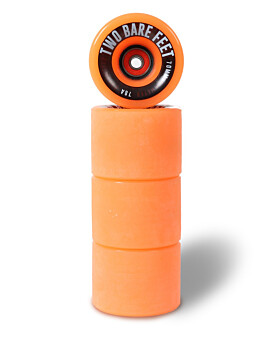
Sessions 78A Longboard Skateboard Wheels (70mm Orange) with Two Bare Feet Pro Series 7 Bearings
Special Price £14.99 Regular Price £20.99 -
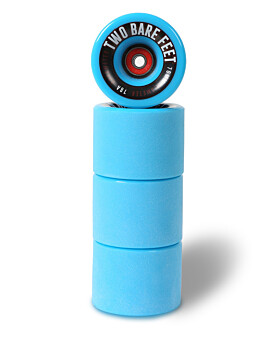
Sessions 78A Longboard Skateboard Wheels (70mm Blue) with Two Bare Feet Pro Series 7 Bearings
Special Price £14.99 Regular Price £20.99 -
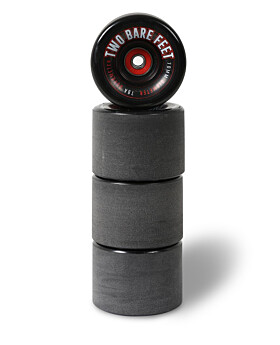
Sessions 78A Longboard Skateboard Wheels (70mm Black) with Two Bare Feet Pro Series 7 Bearings
Special Price £14.99 Regular Price £20.99 -
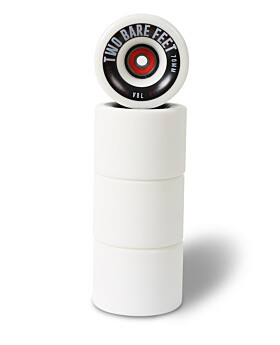
Sessions 78A Longboard Skateboard Wheels (70mm White) with Two Bare Feet Pro Series 7 Bearings
Special Price £14.99 Regular Price £20.99 -

Two Bare Feet "The Chuck" 44in Bamboo Series Longboard Skateboard Complete (Black Wheels)
Special Price £79.99 Regular Price £109.99 -
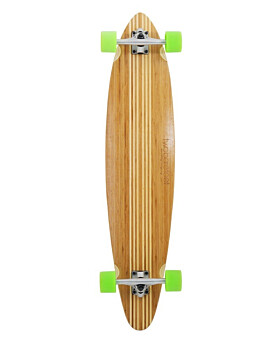
Two Bare Feet "The Chad" 42in Bamboo Series Longboard Skateboard Complete (Green Wheels)
Special Price £79.99 Regular Price £109.99 -
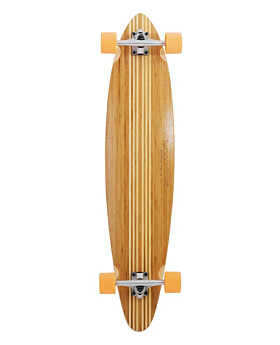
Two Bare Feet "The Chad" 42in Bamboo Series Longboard Skateboard Complete (Orange Wheels)
Special Price £79.99 Regular Price £109.99 -

Two Bare Feet "The Deacon" 40in Bamboo Series Longboard Skateboard Complete (Blue Wheels)
Special Price £79.99 Regular Price £109.99 -
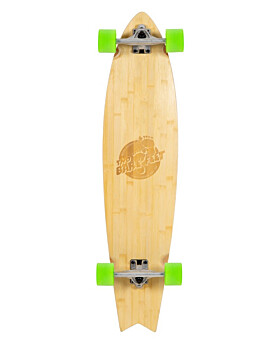
Two Bare Feet "The Deacon" 40in Bamboo Series Longboard Skateboard Complete (Green Wheels)
Special Price £79.99 Regular Price £109.99 -
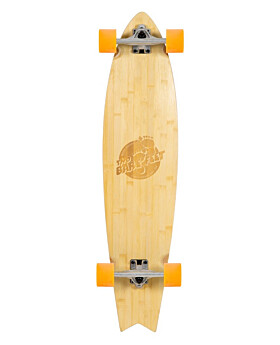
Two Bare Feet "The Deacon" 40in Bamboo Series Longboard Skateboard Complete (Orange Wheels)
Special Price £79.99 Regular Price £109.99 -

Two Bare Feet "The Deacon" 40in Bamboo Series Longboard Skateboard Complete (White Wheels)
Special Price £79.99 Regular Price £109.99 -

Two Bare Feet "The Deacon" 40in Bamboo Series Longboard Skateboard Complete (Black Wheels)
Special Price £79.99 Regular Price £109.99 -
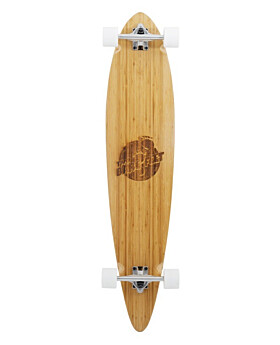
Two Bare Feet "The Chuck" 44in Bamboo Series Longboard Skateboard Complete (White Wheels)
Special Price £79.99 Regular Price £109.99 -
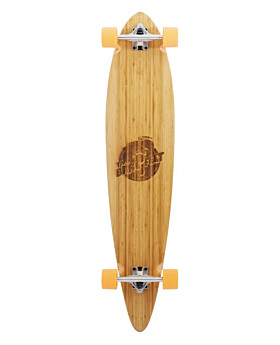
Two Bare Feet "The Chuck" 44in Bamboo Series Longboard Skateboard Complete (Orange Wheels)
Special Price £79.99 Regular Price £109.99 -
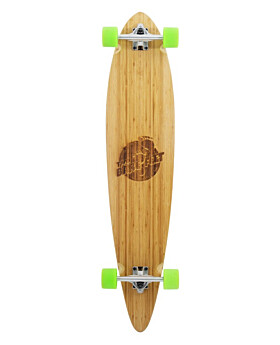
Two Bare Feet "The Chuck" 44in Bamboo Series Longboard Skateboard Complete (Green Wheels)
Special Price £79.99 Regular Price £109.99 -
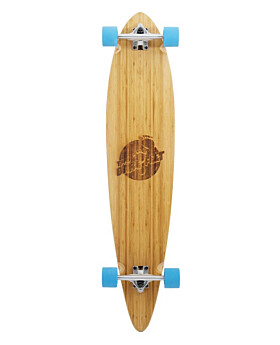
Two Bare Feet "The Chuck" 44in Bamboo Series Longboard Skateboard Complete (Blue Wheels)
Special Price £79.99 Regular Price £109.99 -
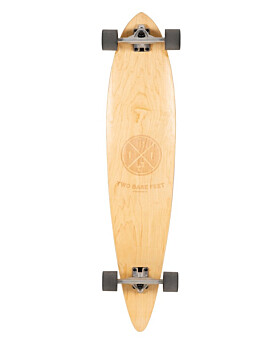
Two Bare Feet Valencia 44in Canadian Maple Longboard Skateboard Complete (Black Wheels)
Special Price £74.99 Regular Price £105.99 -
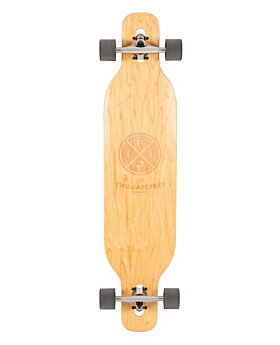
Two Bare Feet "Seville" 42in Canadian Maple Longboard Skateboard Complete (Black Wheels)
Special Price £74.99 Regular Price £105.99 -
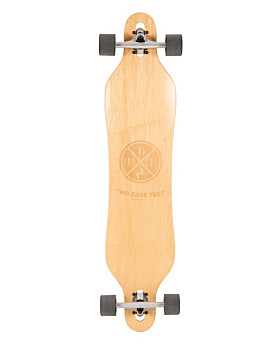
Two Bare Feet Bilbao 42in Canadian Maple Longboard Skateboard Complete (Black Wheels)
Special Price £74.99 Regular Price £105.99 -
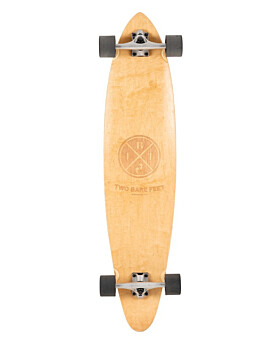
Two Bare Feet Granada 42in Canadian Maple Longboard Skateboard Complete (Black Wheels)
Special Price £74.99 Regular Price £105.99 -
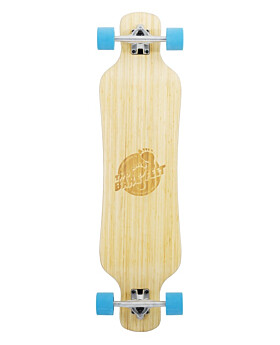
Two Bare Feet "The Larry" 39in Bamboo Series Longboard Skateboard Complete (Blue Wheels)
Special Price £79.99 Regular Price £109.99 -
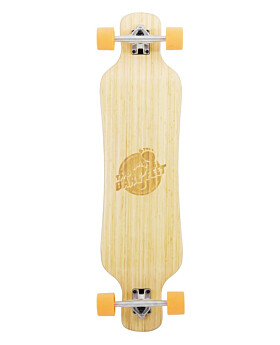
Two Bare Feet "The Larry" 39in Bamboo Series Longboard Skateboard Complete (Orange Wheels)
Special Price £79.99 Regular Price £109.99 -
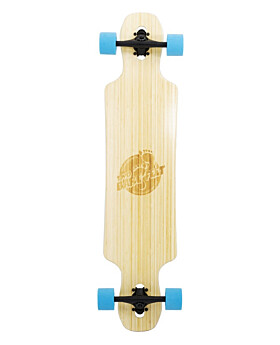
Two Bare Feet "The Hunter" 40in Bamboo Series Longboard Skateboard Complete (Blue Wheels)
Special Price £79.99 Regular Price £109.99 -
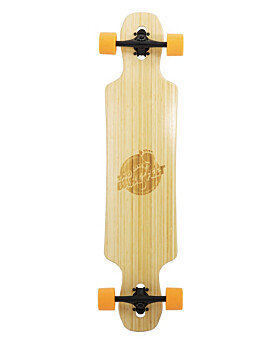
Two Bare Feet "The Hunter" 40in Bamboo Series Longboard Skateboard Complete (Orange Wheels)
Special Price £79.99 Regular Price £109.99 -

Two Bare Feet "The Austin" 36in Bamboo Series Longboard Skateboard Complete (Blue Wheels)
Special Price £79.99 Regular Price £109.99 -

Two Bare Feet "The Austin" 36in Bamboo Series Longboard Skateboard Complete (Orange Wheels)
Special Price £79.99 Regular Price £109.99 -

Two Bare Feet "The Duke" 41in Bamboo Series Longboard Skateboard Complete (Blue Wheels)
Special Price £79.99 Regular Price £109.99 -
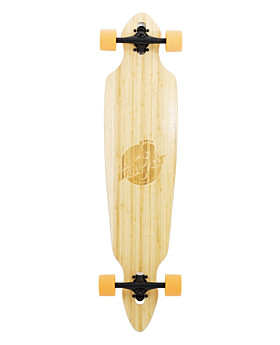
Two Bare Feet "The Duke" 41in Bamboo Series Longboard Skateboard Complete (Orange Wheels)
Special Price £79.99 Regular Price £109.99 -
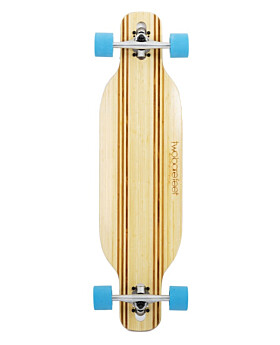
Two Bare Feet "The Bradley" 36in Bamboo Series Longboard Skateboard Complete (Blue Wheels)
Special Price £79.99 Regular Price £109.99 -
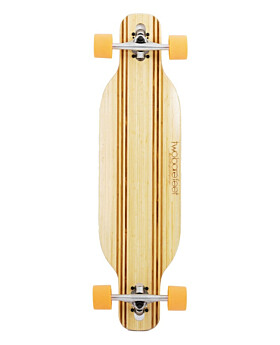
Two Bare Feet "The Bradley" 36in Bamboo Series Longboard Skateboard Complete (Orange Wheels)
Special Price £79.99 Regular Price £109.99 -

Two Bare Feet "The Parker" 42.5in Bamboo Series Longboard Skateboard Complete (Green Wheels)
Special Price £79.99 Regular Price £109.99 -
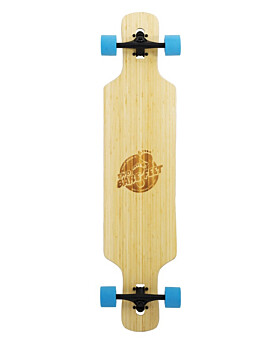
Two Bare Feet "The Parker" 42.5in Bamboo Series Longboard Skateboard Complete (Blue Wheels)
Special Price £79.99 Regular Price £109.99 -
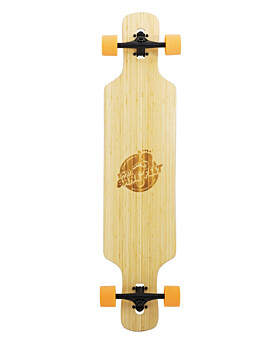
Two Bare Feet "The Parker" 42.5in Bamboo Series Longboard Skateboard Complete (Orange Wheels)
Special Price £79.99 Regular Price £109.99 -

Two Bare Feet "The Larry" 39in Bamboo Series Longboard Skateboard Complete (Green Wheels)
Special Price £79.99 Regular Price £109.99 -

Two Bare Feet "The Austin" 36in Bamboo Series Longboard Skateboard Complete (Green Wheels)
Special Price £79.99 Regular Price £109.99 -

Two Bare Feet "The Austin" 36in Bamboo Series Longboard Skateboard Complete (White Wheels)
Special Price £79.99 Regular Price £109.99 -

Two Bare Feet "The Duke" 41in Bamboo Series Longboard Skateboard Complete (Green Wheels)
Special Price £79.99 Regular Price £109.99 -

Two Bare Feet "The Duke" 41in Bamboo Series Longboard Skateboard Complete (White Wheels)
Special Price £79.99 Regular Price £109.99 -
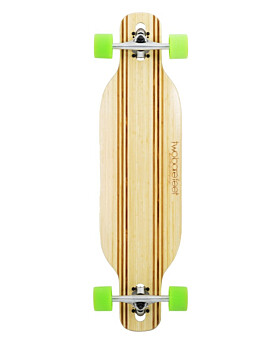
Two Bare Feet "The Bradley" 36in Bamboo Series Longboard Skateboard Complete (Green Wheels)
Special Price £79.99 Regular Price £109.99 -

Two Bare Feet "The Bradley" 36in Bamboo Series Longboard Skateboard Complete (White Wheels)
Special Price £79.99 Regular Price £109.99 -
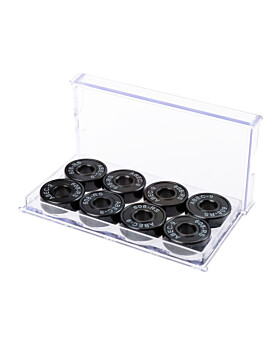
ABEC 9 608RS Skateboard Bearings (Set of 8)
£9.99 -
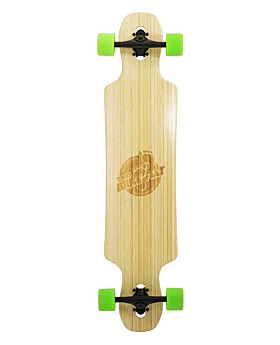
Two Bare Feet "The Hunter" 40in Bamboo Series Longboard Skateboard Complete (Green Wheels)
Special Price £79.99 Regular Price £109.99 -
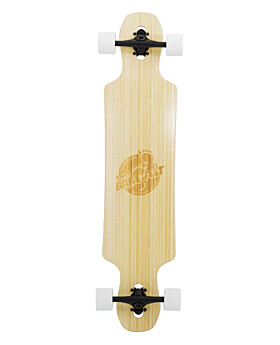
Two Bare Feet "The Hunter" 40in Bamboo Series Longboard Skateboard Complete (White Wheels)
Special Price £79.99 Regular Price £109.99 -
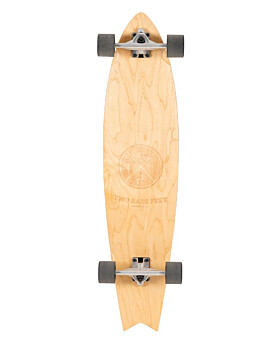
Two Bare Feet Girona 40in Canadian Maple Longboard Skateboard Complete (Black Wheels)
Special Price £74.99 Regular Price £105.99 -
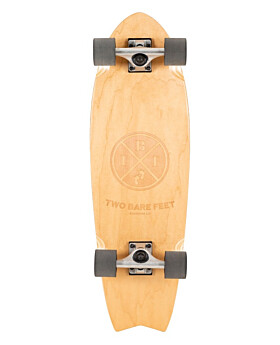
Two Bare Feet Malaga 31in Canadian Maple Longboard Skateboard Complete
Special Price £74.99 Regular Price £105.99 -
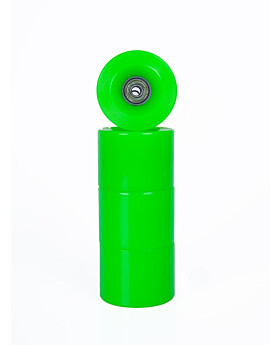
Edge Series Longboard Wheels Set of 4 70mm / 78A plus Bearings (Green)
Special Price £12.99 Regular Price £19.99
2. What is a surfskate?
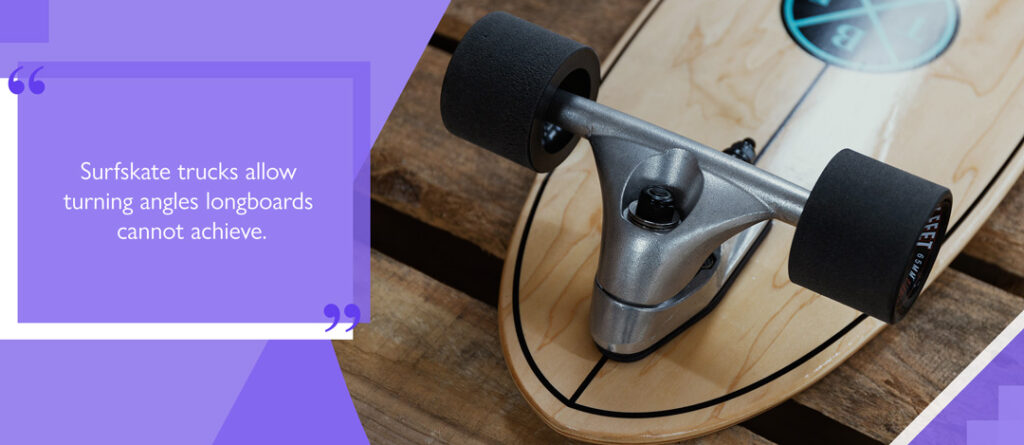
Surfskates are designed to replicate surfing sensations on concrete. The defining feature separating surfskates from all other board types is the specialised front truck system, which allows a wide range of motion that standard trucks cannot achieve. This enhanced mobility allows riders to generate speed through pumping motions alone, carve in very tight arcs, and practise surf-specific manoeuvres on flat ground.
Surfskate dimensions typically range from 28 to 34 inches in length, though some models extend to 40 inches. The wheelbase measurement—the distance between front and rear axles—matters more than deck length when evaluating surfskates. Shorter wheelbases create more responsive, surf-like sensations that allow quicker transitions and snappier turns. Deck shapes often mimic surfboard outlines, with generous width throughout promoting stability during dynamic movements.
How surfskate trucks work
The rear truck on a surfskate is often a standard skateboard truck, providing stability and a fixed pivot point. The front truck incorporates a spring-loaded or bushing-based mechanism that creates an additional axis of rotation, allowing the front wheels to pivot far more than any standard truck allows.
Two Bare Feet offers a Surfskate Truck system, which balances responsiveness with stability, working well for riders learning surfskate fundamentals or those who value some control at speed. This system uses premium materials and construction to deliver quality performance at accessible prices.
The practical result becomes apparent the moment you step on board. The loose, mobile feel of the front truck allows generating forward momentum through weight shifts and body rotation rather than pushing with your foot. This pumping motion engages your entire body, creating a kinetic chain from ankles through knees, hips, and shoulders. The movement pattern mirrors techniques surfers use to generate speed down wave faces, making surfskates invaluable for land-based surf training.
-
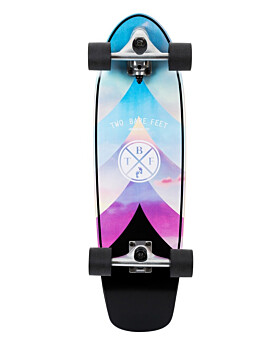
Two Bare Feet 'Slipstream' 30" Surfskate Complete Skateboard
Special Price £74.99 Regular Price £99.99 -
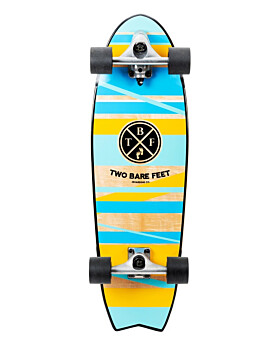
Two Bare Feet 'Wedge' 31" Surfskate Complete Skateboard
Special Price £74.99 Regular Price £99.99 -
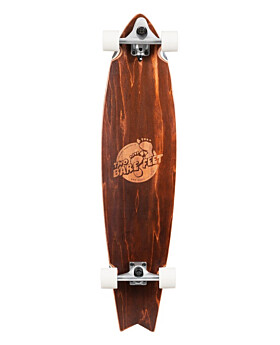
Two Bare Feet "Palma" 40in Surfskate Complete Skateboard Complete (White Wheels)
Special Price £74.99 Regular Price £89.99 -
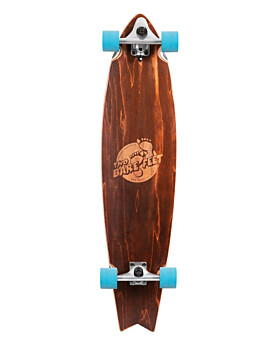
Two Bare Feet "Palma" 40in Surfskate Complete Skateboard Complete (Blue Wheels)
Special Price £74.99 Regular Price £89.99 -
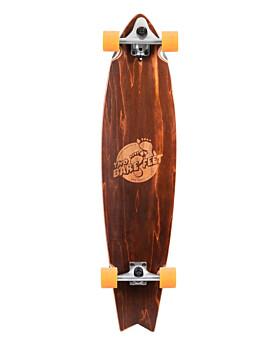
Two Bare Feet "Palma" 40in Surfskate Complete Skateboard Complete (Orange Wheels)
Special Price £74.99 Regular Price £89.99 -
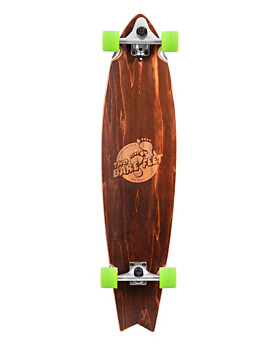
Two Bare Feet "Palma" 40in Surfskate Complete Skateboard Complete (Green Wheels)
Special Price £74.99 Regular Price £89.99
3. Key differences between longboards and surfskates
Deck size and shape
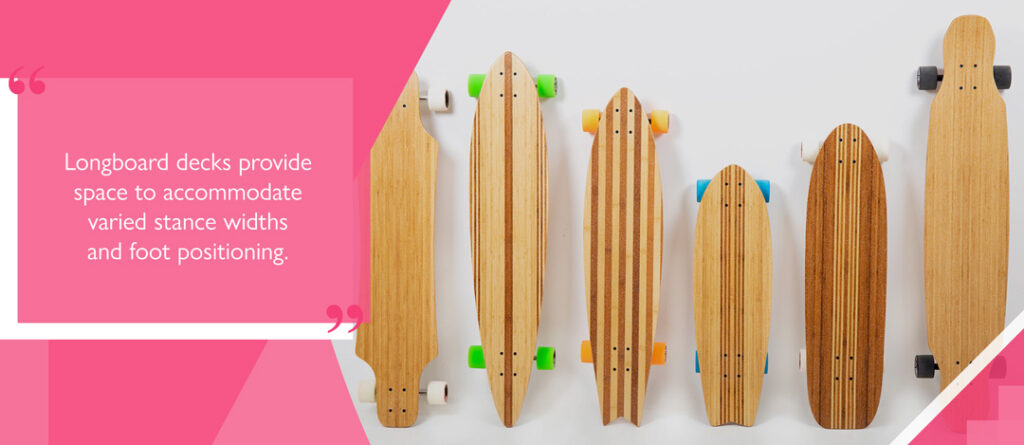
Longboard decks provide more standing room. A typical longboard between 39 and 44 inches offers space to accommodate varied stance widths and adjust foot position during longer rides. The Two Bare Feet Valencia 44in Canadian Maple Longboard exemplifies this, providing ample space for comfortable cruising over extended distances. The extended wheelbase that accompanies these longer decks creates excellent stability—the greater distance between front and rear axles resists the twitchy behaviour that makes shorter boards feel unstable at speed.
Deck mounting style also influences the ride. Top-mount construction, where the deck sits above the trucks, raises your centre of gravity and creates a more responsive, surf-like feel despite requiring more active balance. Drop-through mounting, where trucks pass through cutouts in the deck, lowers your standing platform. The reduced height makes pushing less tiring—your pushing leg extends less with each stroke—and creates stability at speed because your weight sits closer to the ground.
The shape of the deck matters as much as its length. Pintail designs featuring narrow, pointed tails and noses reduce weight while maintaining structural integrity, creating boards that feel lively and manoeuvrable despite generous length. Symmetrical shapes allow riding in either direction—critical for freeriding where you’ll approach hills backwards (switch stance) as often as forwards (regular stance). Kicktails, the upward curves at deck ends, enable tricks like manuals and provide leverage for quick directional changes, though they reduce usable standing space.
Concave—the subtle upward curve from the deck’s centreline toward its edges—affects foot placement and control. Mild concave provides gentle guidance for foot positioning without feeling restrictive, while aggressive concave locks feet firmly in place during hard carving or high-speed runs. W-concave, featuring a subtle raised spine running lengthwise down the deck’s centre, creates additional foot reference points and enhances leverage for technical manoeuvres. The Two Bare Feet bamboo range incorporates varied concave profiles across different models, matching deck shape to intended use.
Surfskate decks exchange platform size for manoeuvrability. The difference between surfskate and cruiser dimensions becomes apparent here—while both might measure similarly in overall length, surfskate truck geometry creates capabilities that shorter cruiser longboards cannot match. The Two Bare Feet Palma 40in Surfskate, available in various wheel colours, demonstrates how surfskates can offer more standing room while maintaining the specialised truck systems that define the category. The longer wheelbase slightly moderates the ultra-responsive characteristics of compact surfskates, making this length approachable for riders finding 28-30 inch models too twitchy initially.
Shorter surfskates in the 28-31 inch range like the Two Bare Feet Wedge 31in prioritise maximum responsiveness and portability. These compact dimensions create the most surf-authentic sensations—tight transitions, explosive direction changes, and the need for constant active balance that precisely mirrors surfing small-to-medium waves. The reduced wheelbase means less deck between your feet, demanding more precise weight distribution and positioning. However, this challenge becomes the point for serious surf training—replicating the unforgiving nature of surfboard dimensions prepares you for actual wave riding more effectively than oversized, forgiving platforms.
Truck systems and turning
Longboards employ reverse kingpin trucks delivering predictable, linear turning characteristics. When you lean into a turn, the trucks respond proportionally, creating smooth arcs that feel controlled and intuitive. Two Bare Feet longboards come equipped with 7-inch aluminium RKP trucks that allow adjustment—looser setups allow sharper turns while tighter configurations enhance straight-line stability.
The difference in turning radius difference becomes apparent when comparing cornering abilities. Longboards require space to complete turns, with arcs determined by truck geometry, bushing hardness, and deck flexibility. Even with loose trucks, longboards maintain measured, progressive turning that beginners find confidence-inspiring.
Surfskate trucks create an entirely different experience. The mobile front truck allows turning angles longboards cannot achieve, allowing riders to wrap 180-degree turns in remarkably tight spaces. The Two Bare Feet Slipstream 30in surfskate demonstrates this capability, enabling riders to carve within a driveway’s width while generating speed through pumping.
Ride height and centre of gravity
The distance between your feet and the ground influences how boards handle, affecting everything from pushing efficiency to high-speed stability.
Drop-through boards position decks low by cutting openings that allow truck baseplates to mount through the deck rather than beneath it. This lowers your standing platform by approximately 2-3 inches, placing your centre of gravity closer to the ground. This results in your pushing leg extending less with each stroke, reducing fatigue over distance, while the lowered centre of gravity enhances stability, particularly at speed. Drop-through boards feel planted, allowing riders to explore higher speeds without unsettling wobbles.
Top-mount boards, where decks sit above truck baseplates, sacrifice stability advantages in exchange for increased leverage and responsiveness. The higher ride height creates more aggressive carving characteristics suited to riders prioritising surf-like flow over straight-line efficiency.
Surfskates that employ top-mount construction require clearance between deck and ground to accommodate the extreme range of motion their front trucks demand. A spring-loaded mechanism needs space to articulate through its full travel without wheels contacting the deck—a problem known as wheelbite that stops boards instantly. The necessary clearance places surfskate riders higher off the ground, creating less stable platforms that demand active balance and core engagement throughout riding.
Speed and stability
Longboards dominate when speed matters. Longer wheelbases, lower centres of gravity, and stable truck geometry create platforms that inspire confidence when building velocity. The Two Bare Feet “The Duke” 41in Bamboo Series, with its 31-inch wheelbase and drop-through mounting, exemplifies boards designed for comfortable speed over varied terrain.
Surfskates approach speed differently. Short wheelbases and loose front trucks create setups that feel unstable when attempting straight-line speed. However, this apparent limitation becomes an asset on descents—skilled surfskaters can use continuous carving to regulate velocity, navigating slopes through energy-scrubbing turns rather than relying solely on foot braking.
Wheels and bearings
The components connecting your board to the ground influence ride quality, speed capability, and terrain suitability. Understanding wheel and bearing specifications helps explain why longboards and surfskates feel different even when deck sizes appear similar.
Wheel diameter determines how obstacles affect your ride and influences top speed potential. The 70mm wheels fitted to most Two Bare Feet longboards roll over cracks, pebbles, and minor surface imperfections without stopping dead or throwing you forward. Larger diameter creates momentum that maintains speed efficiently—each revolution covers more ground—while the increased contact patch distributes impacts across more material, absorbing roughness that smaller wheels transmit harshly to your feet. 70mm wheels strike a balance between obstacle clearance, weight, and acceleration responsiveness.
Surfskate wheels typically measure 65-70mm depending on model and intended use. Smaller wheels suit technical riding where quick acceleration and nimble feel matter more than raw speed maintenance. The reduced rotational mass responds instantly to pumping inputs, allowing explosive acceleration from standstill or out of tight carves.
Wheel durometer (hardness) affects grip, durability, and ride smoothness. The 78A durometer wheels found throughout Two Bare Feet’s longboards and surfskates are made of soft, grippy urethane that conforms to pavement texture, providing traction for confident cornering and comfortable vibration dampening. The choice of softer wheels prioritises comfort and control over top speed, making them ideal for cruising and carving where predictable grip matters more than reducing rolling resistance.
The durometer trade-off becomes particularly relevant for different riding styles. Harder wheels (85A+) roll faster on smooth surfaces and resist flat-spotting from aggressive braking but transmit more vibration and offer less cornering grip. Softer wheels (75-78A) better absorb road imperfections and grip well through corners but wear faster with daily use and feel slightly sluggish on perfectly smooth pavement. 78A wheels offer an effective middle ground for recreational and commuting use.
Bearing ratings use the ABEC scale, with higher numbers indicating tighter manufacturing tolerances. The ABEC7 bearings found in Two Bare Feet boards provide smooth, efficient rolling for skateboard speeds without the premium pricing of ABEC9 ratings. In practical terms, bearing quality affects how longboards maintain momentum after pushing, how much effort is required to reach cruising speed, and how smoothly wheels spin. Clean, properly lubricated ABEC5 bearings often outperform dirty, neglected ABEC9 bearings—maintenance matters more than rating for real-world performance.
The sealed design of quality bearings provides some protection against dust and moisture, but no bearing system remains completely immune to contamination. Riding through puddles or on sandy surfaces accelerates bearing wear, making periodic cleaning essential for riders in wet climates or beach areas. The small investment of time cleaning bearings every few months extends their lifespan while maintaining the smooth, efficient roll that makes skateboarding enjoyable.
Propulsion: pushing vs pumping
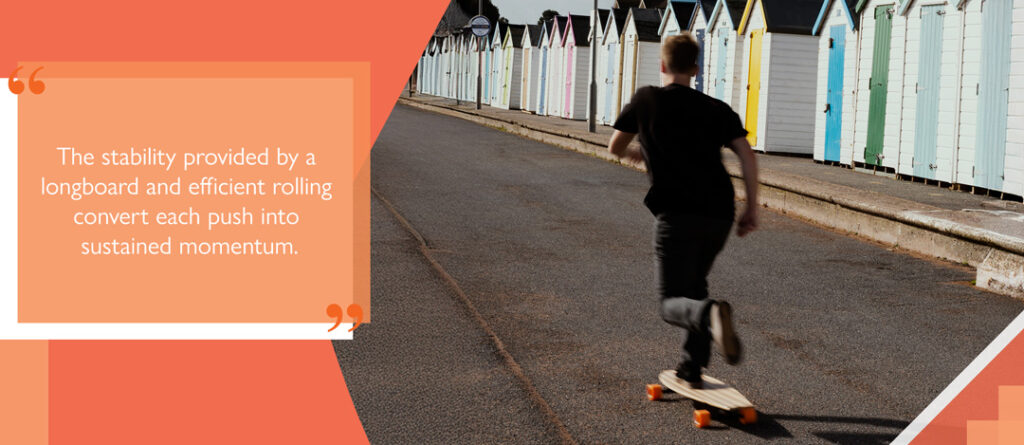
Longboarding relies primarily on pushing—placing one foot on the ground to propel yourself forward while balancing on the board. This technique works effectively because the stable platform provided by a longboard and efficient rolling convert each push into sustained momentum.
The 70mm wheels and ABEC7 bearings fitted to Two Bare Feet longboards maintain momentum well. On flat terrain, experienced riders can maintain cruising speeds of 10-15 mph with relatively infrequent pushing, making longboards practical for commuting distances of several miles.
Surfskate and longboard pumping differs in technique. Longboards can be pumped to generate speed but the technique demands more effort than straightforward pushing. Surfskates utilise pumping as their primary propulsion method. The loose front truck transforms weight shifts and body rotation into forward momentum. The technique involves coordinating ankle flexion, knee compression, hip rotation, and shoulder movement into fluid motions. When executed properly, pumping allows maintaining speed on flat ground indefinitely. Land surf training often begins with learning this pumping motion, as it forms the foundation for generating speed on a surfboard.
Comparison table: longboard vs surfskate
|
Characteristic |
Longboard |
Surfskate |
|
Typical deck length |
36-44+ inches |
28-40 inches |
|
Typical wheelbase |
28-33 inches |
14-20 inches (varies) |
|
Front truck type |
Reverse Kingpin (RKP) |
Spring-loaded or bushing-based surfskate system |
|
Rear truck type |
Reverse Kingpin (RKP) |
Standard skateboard truck |
|
Ride height |
Low to medium (especially drop-through models) |
Medium to high (requires clearance) |
|
Turning radius |
Wide, flowing arcs |
Extremely tight, surf-like carves |
|
Best terrain |
Bike paths, roads, gentle hills, distance cruising |
Flat ground, skateparks, moderate hills, tight spaces |
|
Primary propulsion |
Pushing with foot |
Pumping through body movement |
|
Speed capability |
High straight-line speed |
Moderate speed |
|
Stability |
Very stable, especially at speed |
Requires active balance and core engagement |
|
Learning curve |
Gentle, intuitive for beginners |
Steeper initial curve, rewarding with practice |
|
Maintenance level |
Low (basic bearing and wheel care) |
Moderate (spring tension adjustment for spring systems; more frequent inspection) |
|
Physical demand |
Lower body focused (leg muscles during pushing) |
Full-body workout (core, legs, shoulders engaged) |
|
Commuting suitability |
Excellent for all distances |
Workable for short distances (under 2 miles) |
|
Ideal use cases |
Transport, distance cruising, downhill, freeriding, relaxed carving |
Surf training, aggressive carving, fitness, skill development, tight urban navigation |
4. Which board suits your riding goals?
For cruising and commuting
Longboards excel as transportation. The combination of foot space, efficient rolling, and stable handling makes them practical for covering distances. As an example, the Two Bare Feet Granada 42in Canadian Maple Longboard provides the stability and comfort that commuters appreciate, while its symmetrical shape works equally well for casual cruising or more technical freeriding.
Commuting on a surfskate remains possible for shorter routes, though it requires different considerations. The ability to generate speed through pumping rather than constant pushing appeals to some riders, but the technique demands more energy than longboard pushing. The Two Bare Feet Palma 40in Surfskate, with its longer (for a surfskate) deck and slightly more stable characteristics, handles short commutes more comfortably than more compact models.
For carving and flow riding
Both board types offer carving capabilities delivered in distinctly different ways. Longboard carving emphasises flowing, drawn-out turns that build rhythm across available space. The Two Bare Feet Girona 40in Maple longboard is an example of a board which offers a responsive and smooth feeling in the carve, allowing riders to link turns together seamlessly, and to generate a meditative flow that many find deeply satisfying.
Surfskate carving operates in an entirely different realm. These boards transform carving from something requiring space and momentum into a technique possible within remarkably tight confines.
For surf training and practice
Surfers seeking to improve wave riding on land will find surfskates ideal. The specialised truck geometry allows practising of surf manoeuvres that cannot be replicated on standard boards. Bottom turns, the foundational manoeuvre for generating speed and setting up for other moves, translate well from surfskate to surfboard. Top turns and cutbacks can be drilled repeatedly, building muscle memory that carries directly to waves.
Regular surfskate practice improves balance, strengthens surf-specific muscle groups, and maintains the motor patterns required for dynamic wave riding. For surfers living far from the coast or waiting for swell to arrive, a surfskate is a great way to develop and maintenance surfing skills.
For fitness and full-body workout
Is surfskating good exercise? The answer is definitively yes. The constant pumping motion required to maintain speed engages your entire body, from ankles stabilising the board through knees driving compression and extension, hips rotating to generate torque, core muscles maintaining balance, and shoulders coordinating upper body contribution. Sessions can leave you feeling that you’ve had an intensive workout, having used muscles while maintaining balance and coordination throughout.
Longboards provide fitness benefits through different mechanisms. Pushing repeatedly works leg muscles, particularly the pushing leg’s glutes, hamstrings, and calves. Longer sessions build muscular endurance and provide low-impact cardiovascular exercise, though the activity remains primarily lower-body focused.
For beginners and new riders
For the skating novice, longboards generally offer gentler learning curves. Their stable platforms, predictable handling, and forgiving nature allow new riders to build confidence gradually. A board like the Two Bare Feet Bilbao 42in Canadian Maple Longboard provides enough stability that most people can step on and push down the street within their first session.
Surfskates present a steeper initial challenge. The loose front truck feels unstable to riders accustomed to standard skateboards or with no board sports experience. First attempts often involve wobbling and over-correcting. However, this greater challenge shouldn’t discourage motivated learners—skills develop with practice, with enough time you’ll eventually experience a breakthrough where the board suddenly makes sense.
5. Can you have both boards?
Many riders eventually discover that owning both a longboard and a surfskate provides the best of both worlds, with each board serving different purposes, moods, and riding situations. Rather than viewing the choice as exclusive, consider how these boards complement each other and fill distinct niches in your riding life.
The skills developed on one board partially transfer to the other. The balance and board awareness you build while cruising a longboard creates a foundation that makes learning to surfskate easier. Similarly, the active balance and core strength developed through surfskating enhance your longboard riding, allowing tighter carves and better overall board control. The two disciplines complement each other rather than compete.
Riders often develop preferences for specific situations based on each board’s strengths. A longboard might serve as the daily commuter, providing efficient transport while saving energy. The same rider might keep a surfskate for evening sessions focused on skill practice, fitness workouts, or aggressive carving. This division allows each board to excel in its intended role.
The rotating use pattern that emerges when owning both can help extend the life of each board. Usage is distributed across two boards, with each experiencing less frequent but more appropriate use. Your longboard wheels last longer because you’re not forcing tight carves that scrub rubber, while your surfskate components experience less stress because you’re not attempting sustained high-speed runs they weren’t designed for.
Budget-conscious riders can start with whichever board aligns more closely with their primary goals, then add the complementary type when budget permits.
6. Choosing the right board size
Longboard sizing considerations
Deck length represents the most obvious sizing variable. Shorter boards between 36 and 40 inches provide more manoeuvrability and feel nimbler in tight spaces, exemplified by boards like the Two Bare Feet Larry 39in Bamboo Series. Longer boards from 42 to 44 inches prioritise stability and comfort during extended rides, with models like the Two Bare Feet Valencia 44in or Chuck 44in Bamboo Series offering spacious platforms accommodating wider stances. The additional length creates more foot space, allowing taller riders or those with wider stances to find comfortable positions. The longer wheelbase dampens road vibrations and provides a more planted, confidence-inspiring feel at speed.
Rider height and weight influence optimal selection, though personal preference matters equally. Taller riders generally appreciate longer boards accommodating their stance width comfortably. Heavier riders benefit from stiffer decks resisting excessive flex—the Canadian maple construction found in Two Bare Feet’s maple longboard range provides this rigidity while maintaining durability.
Surfskate sizing considerations
Wheelbase matters more than overall deck length when evaluating surfskates. Shorter wheelbases create snappier, more surf-like handling but demand more active balance. The compact Two Bare Feet Wedge 31in and Slipstream 30in demonstrate this tight, responsive category. The Two Bare Feet Palma 40in sits at the opposite end, offering more platform space and slightly more stable characteristics while maintaining authentic surfskate capabilities.
7. Safety gear and protective equipment
Responsible riding includes appropriate safety considerations, particularly during learning phases when falls occur more frequently. Head protection represents the most critical safety consideration for any board sport, and riders should invest in quality skateboarding helmets providing coverage and impact absorption suited to skateboarding falls. Knee pads and elbow pads protect joints that frequently contact the ground, while wrist guards deserve special attention for surfskate beginners—the instinctive reaction when losing balance involves extending arms to catch yourself, placing considerable stress on wrists.
Selecting appropriate practice locations accelerates learning while minimising hazards. Smooth, flat surfaces provide ideal environments for initial sessions. Empty car parks, seafront promenades during quieter hours, and dedicated cycle paths offer expansive, obstacle-free spaces perfect for building confidence. Weather conditions impact safety—skateboarding in rain creates serious hazards regardless of board type, as polyurethane wheels lose traction on damp pavement.
8. Maintenance and care
Proper maintenance extends board life, maintains performance, and ensures safety. Both board types require regular attention, though surfskates demand slightly more due to their complex truck mechanisms.
-
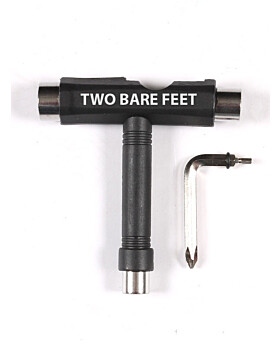
Two Bare Feet Skate Tool Utility (Black)
£3.99 -
Sessions 78A Longboard Skateboard Wheels (70mm Orange) with Two Bare Feet Pro Series 7 Bearings
Special Price £14.99 Regular Price £20.99 -
Sessions 78A Longboard Skateboard Wheels (70mm Blue) with Two Bare Feet Pro Series 7 Bearings
Special Price £14.99 Regular Price £20.99 -
Sessions 78A Longboard Skateboard Wheels (70mm Black) with Two Bare Feet Pro Series 7 Bearings
Special Price £14.99 Regular Price £20.99 -
Sessions 78A Longboard Skateboard Wheels (70mm White) with Two Bare Feet Pro Series 7 Bearings
Special Price £14.99 Regular Price £20.99 -
ABEC 9 608RS Skateboard Bearings (Set of 8)
£9.99 -
Edge Series Longboard Wheels Set of 4 70mm / 78A plus Bearings (Green)
Special Price £12.99 Regular Price £19.99
Longboard maintenance
Wheel bearings gradually collect dirt and moisture that degrades performance. The ABEC7 bearings in Two Bare Feet longboards should be cleaned periodically—particularly after riding through dusty conditions or if they begin producing noise. The process involves removing wheels, extracting bearings, cleaning them in isopropyl alcohol, allowing complete drying, then lubricating with bearing-specific lubricant before reassembly. Many riders establish quarterly cleaning schedules, adjusting frequency based on riding conditions.
Wheel rotation extends wheel life by ensuring even wear patterns. Longboard wheels wear faster on inner edges due to pressure distribution during turns. Periodically swapping wheel positions—moving front wheels to rear and vice versa—promotes uniform wear. Riders covering significant mileage benefit from monthly rotations, while casual riders might rotate quarterly.
Truck tightness adjustments influence turning responsiveness and stability. The kingpin nut can be tightened or loosened with a skate tool to adjust bushing compression. New riders typically benefit from trucks on the tighter side, providing stability while learning. As skills progress, gradually loosening trucks allows accessing the flowing carves that make longboarding enjoyable. Regular checking ensures kingpin nuts haven’t vibrated loose during riding.
Deck inspection catches damage before it becomes dangerous. Bamboo and maple decks can develop cracks or stress fractures, particularly around truck mounting areas. Monthly visual inspections identifying early damage allow problems to be addressed while they remain superficial. Significant damage necessitates deck replacement—continuing to ride compromised decks risks catastrophic failure.
Surfskate maintenance
Surfskates require more involved maintenance due to complex truck mechanisms. The spring-loaded systems on Two Bare Feet boards require periodic inspection ensuring springs maintain proper tension and pivot points remain lubricated.
The spring mechanism handles substantial forces during aggressive pumping. Inspecting springs for fatigue and appropriate tension should occur monthly for regular riders. Springs gradually weaken with use, losing their return force and making trucks feel sloppy.
The adjustment mechanism controls spring tension, affecting how much resistance the front truck provides. Understanding how to adjust your surfskate allows you to tune your board to match your skill level and preference. New surfskaters should begin with trucks on the tighter side, providing more support while learning. As balance and control improve, gradually loosening the adjustment creates more freedom and surf-authentic response.
Finding optimal tension requires experimentation. Too tight, and the truck feels dead, requiring excessive force to initiate turns. Too loose, and the truck feels wayward and unstable. Most riders discover their sweet spot through trial and error, adjusting based on feedback from riding sessions.
Pivot points and bushings experience more wear than longboard equivalents due to greater range of motion. Regular lubrication of pivot cups ensures smooth movement without binding (where the board feels stiff and doesn’t turn smoothly). Bushings gradually degrade from repeated compression, necessitating replacement every 6-12 months depending on usage intensity. Fresh bushings restore responsiveness and predictable return-to-centre behaviour.
Cleaning and storage
After wet rides, thoroughly drying all components prevents rust on hardware and moisture damage to decks. Storing boards indoors in climate-controlled environments prevents warping and delamination. Vertical storage, using wall mounts, prevents decks resting on their edges for extended periods.
9. Making your decision
The choice between a longboard and surfskate ultimately depends on your riding intentions and what aspects of board sports appeal most strongly. Longboards excel as practical transport tools, providing efficient, comfortable rides covering distance with minimal effort. Their stable platforms and predictable handling make them accessible to beginners while remaining engaging for experienced riders appreciating flowing carves and relaxed cruising. The Two Bare Feet longboard range offers outstanding value, delivering quality construction and components performing reliably across varied riding situations.
Surfskates serve different purposes, prioritising dynamic carving, surf training, and full-body engagement over transport efficiency. These boards transform riding into active practice, demanding balance, coordination, and continuous movement building skills and fitness. The Standard Surfskate trucks deliver refined performance for all levels of rider experience, from beginners to surf and skate veterans. Investment in a surfskate pays dividends for those seeking surf-specific training, aggressive carving, or workouts challenging both body and mind.
Many riders eventually own both, using each for its intended purpose rather than forcing one board to serve all needs. This approach maximises enjoyment and ensures you always have the right tool for your current mood and riding goals. The accessible pricing of the Two Bare Feet range makes building this versatile collection practical, allowing exploration of the full spectrum without breaking the budget.
Taking your first steps with confidence
The journey into wheeled board sports begins with that first push, that initial sensation of rolling forward under your own power. Whether you choose a longboard for its practical versatility or a surfskate for its dynamic engagement, you’re selecting a pursuit offering physical challenge, outdoor enjoyment, and a unique blend of transport and recreation. The learning curve varies between board types, but both reward persistence with capabilities expanding continuously as your skills develop.
With the right board matched to your goals, you can explore this world with confidence. The Two Bare Feet range provides everything needed to begin, from complete longboards ready to cruise the moment they arrive to purpose-built surfskates replicating wave-riding sensations on land. The expertise behind these products ensures that whether you’re commuting to work, training for your next surf session, or simply carving through your local park for the pure joy of movement, your board will meet the challenge.
Remember—progression happens through practice. Start in safe environments, wear appropriate protective equipment, and gradually build your skills. Listen to your body and increase difficulty as comfort and confidence grow. The right preparation potentially unlocks resilience and capabilities you hadn’t imagined. Your board awaits, and with it, countless hours of enjoyment exploring the freedom and flow that wheeled board sports provide.