4 June 2024
Skimboarding is an exhilarating watersport that harnesses the power of the shoreline to propel riders across the surface of the water. Often seen as a cousin to surfing, skimboarding offers a unique blend of accessibility and challenge, making it perfect for anyone seeking a dose of aquatic fun.
This guide delves into everything you need to know to get started with skimboarding, from the fundamentals of choosing the right equipment to mastering the essential techniques for riding the waves.
What is skimboarding, and how does it differ from surfing?
Surfing and skimboarding share the common goal of riding waves, but they take very different approaches. Surfers rely on a buoyant board to paddle out into deeper water and catch incoming waves. Skimboarding, on the other hand, takes place entirely in the shallows.
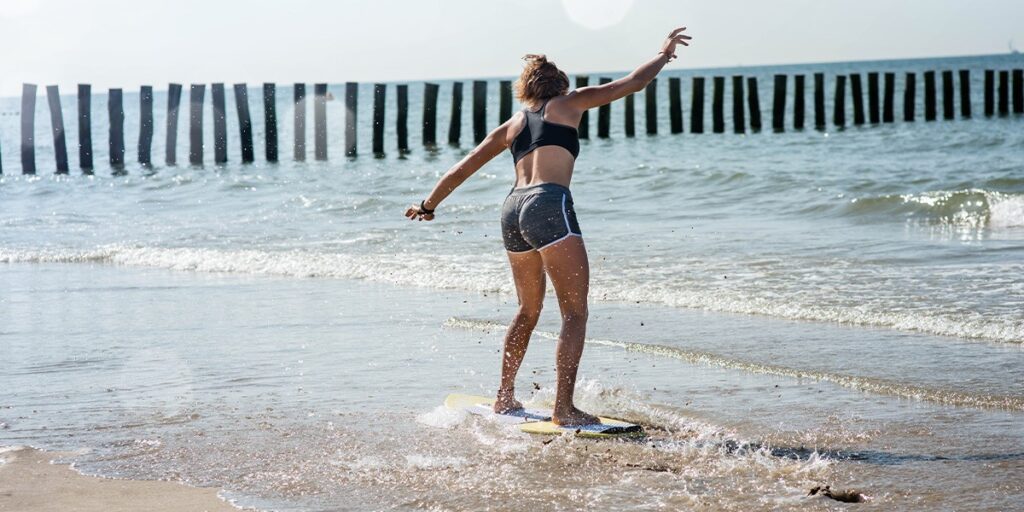
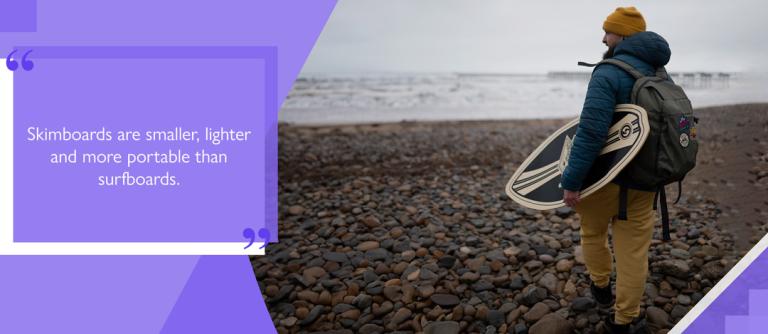
Skimboards are smaller and lighter than surfboards, with no fins. Riders propel themselves forward using a running start before throwing the board down onto the thin layer of water left behind by a receding wave. The skimboard glides or “skims” across the surface, allowing riders to perform tricks and manoeuvres before riding the shore break back to the beach.
The beauty of skimboarding lies in its simplicity. Unlike surfing, which requires paddling out and catching waves, skimboarding allows you to get straight into the action. This makes it a fantastic choice for beginners and seasoned surfers alike, offering a thrilling alternative on calmer days.
Choosing the right skimboard
Your skimboard is your chariot across the water, so choosing the right one is crucial. Here at Two Bare Feet, we offer a carefully curated selection of skimboards designed to cater to riders of all shapes, sizes, and skill levels.
The anatomy of our wooden skimboards
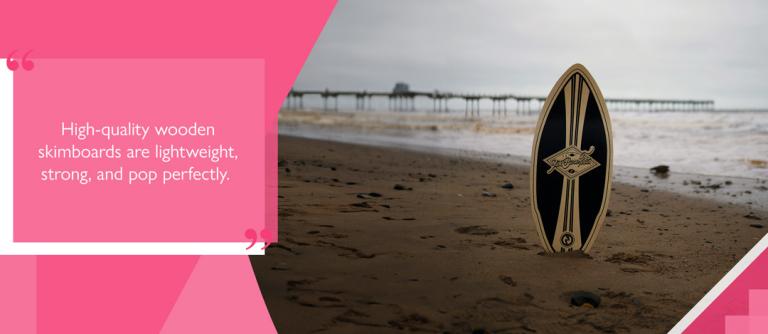
Two Bare Feet skimboards are crafted from high-quality, 7-ply poplar wood, renowned for its lightweight strength and perfect pop. The key features to look for include:
Core
The core, typically constructed from multiple layers of wood laminated together, provides the board with its core strength and rigidity.
Rails
The rails are the thin edges of the board that make contact with the water. Their thickness and shape can influence how the board handles turns and carves.
Finish
A smooth, lacquered finish, like the one applied to all Two Bare Feet skimboards, minimizes friction and ensures a clean glide across the water.
Shape
Skimboards come in various shapes, each with its own performance characteristics.
Pintail skimboards, like our selection of 41-inch skimboards, boast a pointed tail for enhanced stability at higher speeds.
Swallowtail boards, like our 37-inch skimboards, feature a wider, split tail that boosts manoeuvreability, giving you an edge when it comes to performing tricks.
Does size matter?
Both our 37-inch and 41-inch skimboards can be used by children and adults of all skill levels. The size differential can offer a slight nuance to the experience. However, which one suits you better will probably be more a matter of preference and confidence.
- 37-inch skimboard: This is an excellent choice for children and smaller adults. Its shorter length makes it a bit lighter and easier to manoeuvre, ideal for mastering the basics of balance and control.
- 41-inch skimboard: This larger board offers greater stability for taller riders and those seeking higher speeds and steeper waves. It can also be suitable for some children who may find the 37-inch board a little too small.
Two Bare Feet’s skimboards, are great choices for beginners and experienced riders. Crafted from high-quality materials, all our boards are durable, responsive, and provide perfect platforms for learning the fundamentals or pulling off the most eye-catching of moves!
Gearing up for skimboarding
While skimboarding is a relatively minimalist sport, having the right gear can significantly enhance your experience:
Wetsuits
Skimboarding is often enjoyed in cooler waters, and a wetsuit can be a valuable addition to your skimboarding kit, particularly during the spring and autumn months.
A good wetsuit will keep you warm and comfortable in the water, allowing you to extend your skimboarding sessions and maximize your enjoyment.
Choosing the right wetsuit thickness
The thickness of your wetsuit will depend on the water temperature where you’ll be skimboarding. Two Bare Feet offers a range of wetsuits in various thicknesses, so you can find the perfect one for the conditions you’ll be facing.
For milder conditions, a 3/2mm wetsuit should suffice, while colder temperatures may require something thicker to start, such as a 4/3mm wetsuit.
Like the wetsuits we offer, make sure they offer the features you need for increased comfort and durability, such as flatlock seams.
For more information on choosing a wetsuit to match your activity and the conditions you’ll experience, our guide to wetsuit thicknesses is a useful and comprehensive starting point.
Mastering skimboarding techniques
The thrill of skimboarding lies in carving across the water’s surface and performing impressive manoeuvres. Here’s a breakdown of the essential techniques to get you started.
Finding the right beach and wave conditions
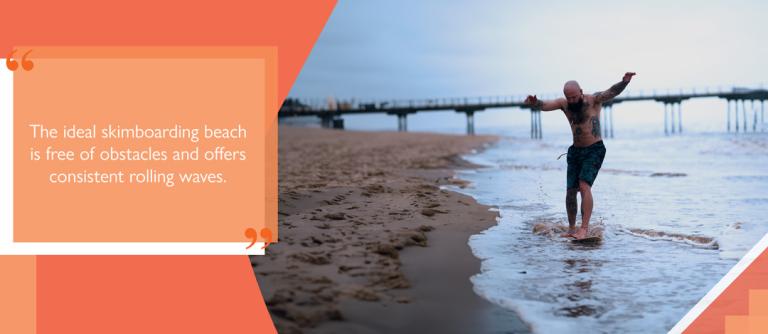
The ideal skimboarding beach is one with a gentle slope and a smooth shoreline free of obstacles. Look for days with consistent, rolling waves that retreat to leave a thin layer of water on the sand. Avoid rocky areas or beaches with strong currents.
Basic skimboarding stance and balance
Your feet should be shoulder-width apart. Start by placing your non-dominant foot near the tail of the board and your dominant foot slightly forward of centre. Keep your knees bent and your centre of gravity low for better balance.
Throwing and catching the skimboard
Once you’ve established your stance, grip the sides of the board and run towards the water’s edge. As you gain momentum, throw the board down onto the thin layer of water, stepping onto it with your back foot first, followed by your front foot.
Riding the waves
Running and dropping onto the skimboard: As a wave approaches, run towards the shore break, picking up speed as you go. Just before the wave breaks, throw the board down in front of you and jump onto it, maintaining a low centre of gravity.
Riding the shore break: Once on the board, adjust your weight distribution to control your speed and direction. Lean forward to pick up speed and lean back to slow down. As you get more comfortable, practise turning by shifting your weight from one foot to the other.
Progressing to deeper water and waves: Skimboarding is primarily a sport for the shallows. However, with experience, you can attempt to ride small waves in deeper water. Remember to prioritize safety and only venture beyond the shallows when you are confident in your skills and the conditions are favourable.
Progressing with tricks
As your confidence and skills grow, you can explore various skimboarding tricks. Some popular examples include:
- Shuvit / Shove It: A 180-degree turn of the board under your feet
- Ollie: Jumping the board off the water
- Body varial: Rotating your body 180 degrees while in the air, landing in a switch stance (with the opposite foot forward). The board itself does not rotate.
- Wrap: Skimming into a wave, performing a 180-degree turn on the face of the wave, and then riding back towards the shore.
Remember, practice makes perfect. Don’t get discouraged if you don’t get it right away.
Skimboarding safety tips
Skimboarding is a safe and enjoyable activity, but as with any water sport, it’s important to prioritize safety.
Be aware of other beachgoers and water users
Skimboarding beaches are often shared by swimmers, sunbathers, and other water enthusiasts. Be mindful of those around you and maintain a safe distance to avoid collisions.
Understand the tides and currents
Always check the tide times and be aware of any currents before entering the water. Avoid skimboarding during strong currents or high tides.
Stay hydrated
Remember to drink plenty of water before, during, and after your skimboarding session. If you’re going to be out in the summer sun, apply sunscreen regularly and liberally. Consider wearing a rash vest that offers UV protection, if possible.
Where to skimboard
The beauty of skimboarding lies in its accessibility. With a skimboard in hand, you can enjoy this exhilarating sport on countless beaches around the UK. Some popular skimboarding destinations include:
- West Wales: The Welsh coastline boasts numerous beaches with long stretches of coastline and consistent waves, making it a haven for skimboarding enthusiasts.
- South West England: Cornwall and Devon offer a plethora of sandy beaches with rolling waves, perfect for skimboarding adventures.
- Scotland: For those seeking a more rugged skimboarding experience, Scotland’s west coast offers a unique combination of stunning scenery and challenging waves.
Beyond these established locations, keep an eye out for any beach with a gentle slope and a smooth shoreline. With a little exploration, you might discover your own hidden skimboarding paradise.
Ride the waves with Two Bare Feet
Skimboarding is an exhilarating and accessible watersport that offers endless fun and excitement. By choosing the right gear, mastering the basic techniques, and prioritizing safety, you can embark on a thrilling journey of wave riding and skill development.
So, what are you waiting for? Grab your skimboard, head to the beach, and let the waves carry you on an unforgettable adventure!
Remember, Two Bare Feet is your one-stop shop for all your skimboarding needs. Explore our range of high-quality skimboards, wetsuits, and accessories to gear up for your next skimboarding session. And if you need any advice, you can always contact our team of skimboarding enthusiasts – they’re always on hand to help.