
12 September 2022
Keeping your wetsuit boots clean and dry between uses protects them, prolonging their useful life.
Why is it important to dry wetsuit boots?
Most wetsuit boots are made from insulating neoprene. This keeps feet warm the same way wetsuits insulatebody heat.
Neoprene contains air pockets, so protecting its structural integrity is crucial to effective insulation.
Microbes and bacteria introduced by feet or water residue will breed in damp, unwashed neoprene. Once bacteria begin breeding in the material, they can be difficult to remove.
Bacteria will cause odour, while mould and mildew growth can weaken the material.
Wetsuit boots that are kept clean and dry remain effective for longer. The neoprene is less likely to stretch, weaken, or crack, and the glue or stitching used on seams will maintain a better seal.
How long do wetsuit boots take to dry?
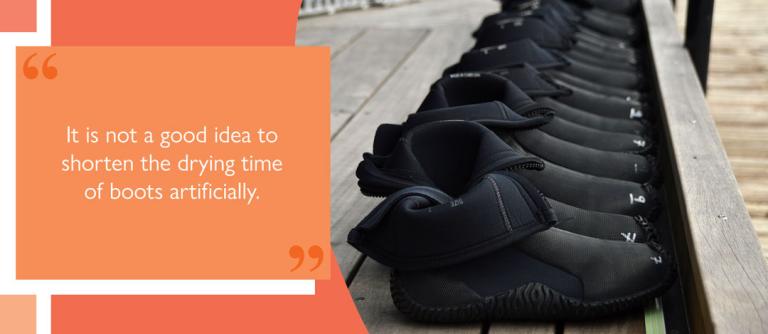
Depending on weather conditions and material thickness, it can take at least a day for neoprene boots to dry fully. Well-ventilated areas and warm, windy days speed up the drying process. Cold, damp conditions increase drying time.
It is not a good idea to shorten drying time artificially. Radiators and heated fans can shrink neoprene and weaken its structure, reducing its insulating properties. Repeated stretching and shrinking will also weaken seams over time.
How to clean wetsuit boots before drying
The cleaning process for wetsuit boots is similar to that used with other neoprene items.
Rinse and clean your wetsuit boots
Use cool, fresh water to soak and rinse the boots after use. This extracts salt, debris, and residue, reducing the chance of the material corroding. Avoid hot water: this will stretch neoprene.
For stubborn odours or stains, you can use specially formulated wetsuit shampoo to gently cleanse neoprene boots without causing damage. Neoprene should not be scrubbed, instead gently rub two areas together. The friction will dislodge dirt without damaging the material.
Boot soles can be cleaned with a soft-bristled, natural brush to gently dislodge embedded dirt and debris.

Draining neoprene boots
After rinsing, lightly squeeze the water out. Try to avoid crushing or misshaping the material.
Absorb excess surface water with a towel, gently turning the boots inside out if possible. This may not be possible with hard-soled or thick wetsuit boots.
Hang or balance the boots upside down to drain out the remaining liquid. When water is drained and removed early, there is less time for bacteria and odour to build up.
Drying wetsuit boots
The best place to dry wetsuit boots without damaging them is in a well-ventilated area out of direct sunlight. If you need to expedite the drying process, a fan circulating room-temperature air will dry the boots faster without damaging the material.
Wetsuit boots can be hung on hooks or pegs, or balanced on racks or sticks such as broom handles while drying. Propping boots open with cardboard tubes or similar items helps maintain airflow.
How to dry neoprene in autumn or winter
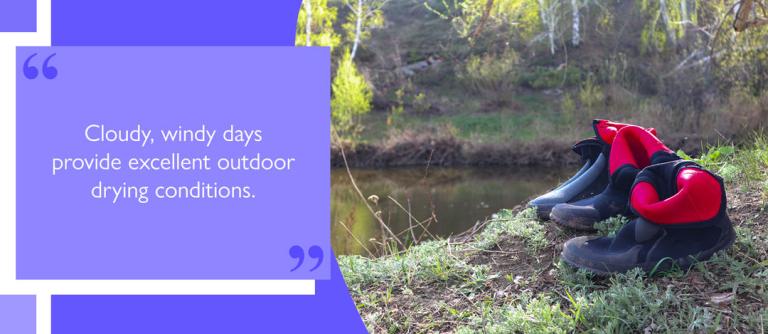
Cloudy, windy days create excellent drying conditions for neoprene as better airflow removes moisture and the chance of damp. Protect wet gear and bring it inside when conditions are freezing.
Check boots are fully dry before storing
Wetsuit boots and other accessories are best stored in a cool, dry place away from direct sunlight. Continually high or fluctuating temperatures can affect the integrity of the material and seams. In addition, be mindful of exposing neoprene to fumes or chemicals in the air.
As when storing a wetsuit, avoid mildew and mould by ensuring your boots are completely dry, inside and out, before stowing. Any residual moisture can quickly cultivate odour and microbes.
Stuffing with material, newspaper, or similar helps to maintain shape and keeps air flowing. Silica packets and other absorbent material placed inside can also help to absorb any remaining moisture.
Quality wetsuit accessories
If your sessions on the water leave you with cold or sore feet, our selection of wetsuit boots and socks can bring back the comfort under all kinds of conditions.
Neoprene socks provide extra warmth and a more tactile connection with the deck of your board, while neoprene boots with soles offer additional protection.
To see our complete range of wetsuit accessories, visit our online store.