11 March 2022
Besides skis, or a snowboard and
high-quality snow goggles
, a ski jacket is one of the most important items on your checklist when
venturing out to the slopes in search of speed and adventure.
Ski jackets
are often sold alongside winter jackets, but the activity to be undertaken
is the primary factor when deciding between one or both
Different levels of jacket insulation
Ski jackets are weatherproofed, and use breathable and waterproof materials
to keep the wearer dry, while also conserving body heat.
While the core is often formed from thin shell layers, ski jackets can be insulated to handle use in differing conditions.
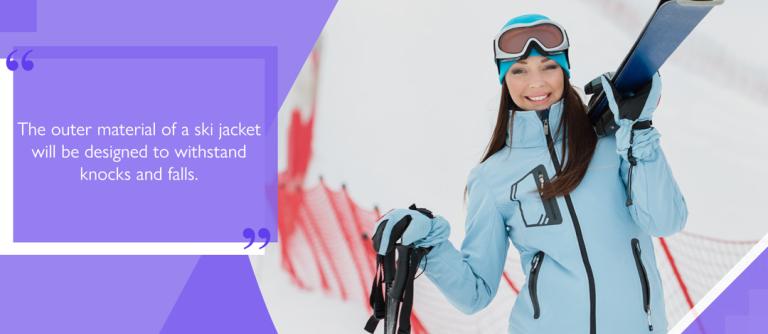
The outer material will likely be tougher than the thin polyester used on
down jackets. This is to prevent tearing if you fall or catch a tree branch
on your way downhill.
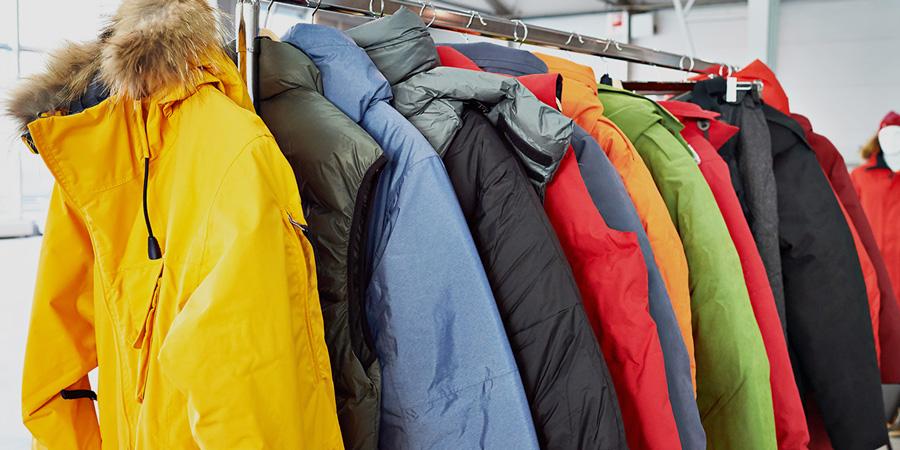
As winter jackets are intended to provide warmth, they may be bulky if
filled with down or synthetic insulating material, restricting movement in
favour of extra warmth.
Ski jacket extras and design features
Several detachable or built-in options may be included with a ski jacket:
- • snow skirts
under the hem prevent snow spray - • secure pockets
to protect valuables on ski lifts or during a tumble - • adjustable cuffs
to keep snow and wind from getting into sleeves.
Many ski jackets also allow the addition of reflective safety strips,
emergency beacons or whistles, should you become lost or injured in adverse
conditions.
Breathability for high intensity activity
The level of exertion required for skiing makes breathable textiles and
design essential for ski jacket manufacture. If sweat is trapped inside, it
can quickly chill the body or feel unpleasantly clammy.
Weatherproofing
Skiing or snowboarding guarantee some contact with high volumes of snow and
snowmelt. Most ski jackets are waterproof instead of water-resistant, specifically to keep the wearer dry.
Down winter jackets can struggle in wet conditions. If water reaches the
feathers, they lose their loft, which lessens their insulating
properties.
How should a ski jacket fit?
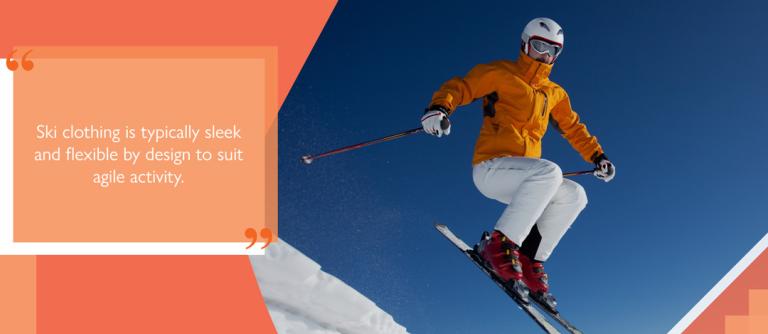
Ski clothing is typically sleek and flexible to aid agility. Restrictive
padded jackets can make quick turns difficult or affect ease of movement.
To maintain flexibility, most ski jackets don’t extend below the hips. Warm
winter jackets can extend to the length of the body, but this can
potentially obstruct leg movement.
Layering for skiing
In particularly cold conditions, a breathable, waterproof ski jacket over a
thinner down jacket can be the perfect combination for warmth and mobility.
If low temperatures mean even the hardest exercise fails to warm you, an
insulating mid layer may help.
Layering this way means you can adjust to changing conditions and your own
body temperature. For example, adding an extra layer while waiting for the
ski lift may help you avoid catching a chill or being uncomfortable.
High quality ski jackets and snow accessories
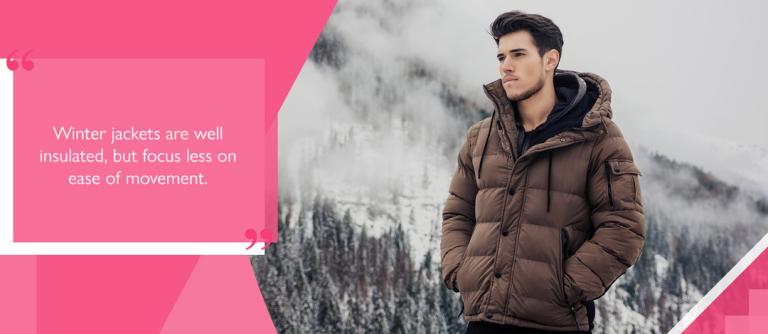
Winter jackets are heavily insulated with less focus on ease of movement or
the needs of snow sports. However, ski jackets are designed to be
aerodynamic, impervious to cold and wet, and allow freedom of movement.
Whether skiing or snowboarding, at Two Bare Feet our range of
high-quality snow gear
will keep you protected and comfortable while out on the slope – from
thermal base layers
and tough
snow trousers
to weatherproof jackets and
snow goggles for maintaining clear vision
.