
22 March 2022
Dry suits keep water out, preventing contact between liquid and skin
entirely. In contrast, wetsuits let water in for use as insulation.
Both protect the wearer from hypothermia, loss of body heat in cold water,
and muscular shock.
How do wetsuits work?
Well-fitting
wetsuits keep you warm
by allowing some water into the suit when submerged. Tight cuffs on the
arms and legs and around the neck stop more water from entering or exiting
the suit. This prevents flushing, where cold water continually
moves through the suit, undoing any insulation.
The water that does enter the suit is warmed by body heat, protecting
against exterior cold.
Most wetsuits are made of neoprene. Air pockets within the
neoprene itself further insulate the body. The thicker the neoprene on a
wetsuit, the greater the insulating barrier.
Benefits of wetsuits in different conditions
Insulation allows wetsuits to retain warmth in the coldest climates, both
in and out of water. You can also
wear a thermal rash vest under a wetsuit
for additional warmth.
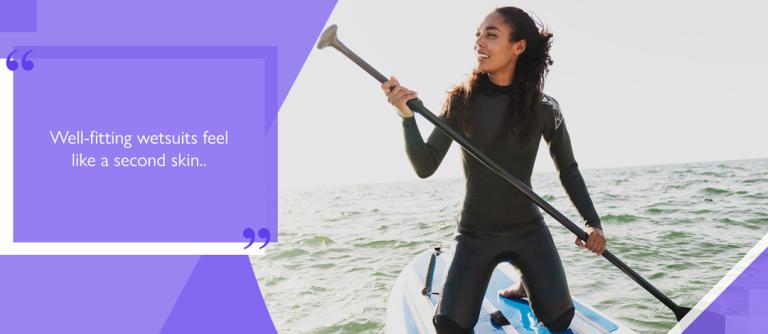
A well-fitting wetsuit feels like a second skin, which allows the wearer
relative freedom of movement. This is perfect for activities requiring
agility and mobility, such as open-water swimming, surfing, or SUP racing.
Streamlining also reduces water resistance and maintains comfort.
Wetsuits that are thinner around the limbs maintain flexibility, while
still prioritising core warmth. This makes them comfortable for long
sessions of SUP touring or kayaking, which require prolonged, repetitive
motions.
Drawbacks to wetsuits
Thicker wetsuits can restrict movement, due to their close
fit. Some sports requiring a range of movement may be more difficult when
conditions necessitate wearing a thick wetsuit. For instance, using a
paddle is harder if your shoulders and elbows are restricted.
Diving at great depths increases the water pressure acting on the body.
This pressure can compress wetsuits, reducing their insulating properties
and buoyancy, as air pockets become smaller.
How do dry suits work?
Dry suits are made of waterproof materials – from rubber to synthetics such
as Gore-Tex. Strong seals around the neck and cuffs keep all water out.
Dry suits are best suited to diving in extremely cold waters or sailing in
cold weather.
Traditionally, a dry suit fit was akin to wearing a loose shell jacket. New
technology has led to the creation of some dry suits that fit more like
wetsuits. This helps with streamlining.
Benefits of dry suits
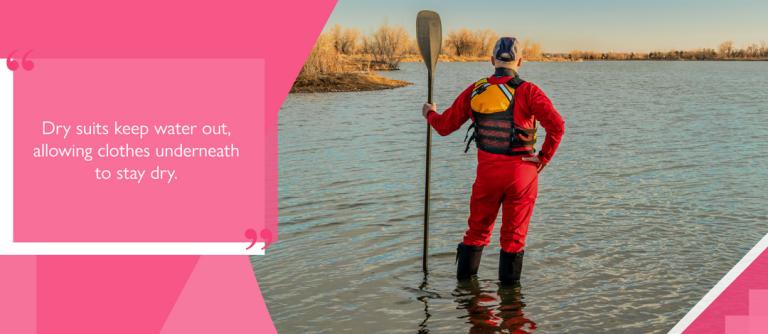
As dry suits keep water out entirely, clothes worn underneath stay dry.
This could be warm clothing for insulation or ordinary clothing you want to
keep dry.
In extremely cold water, particularly if you don’t need to prioritise
agility, dry suits work best with warm layers worn underneath.
Deep sea or cold-water divers often prefer the security dry suits offer.
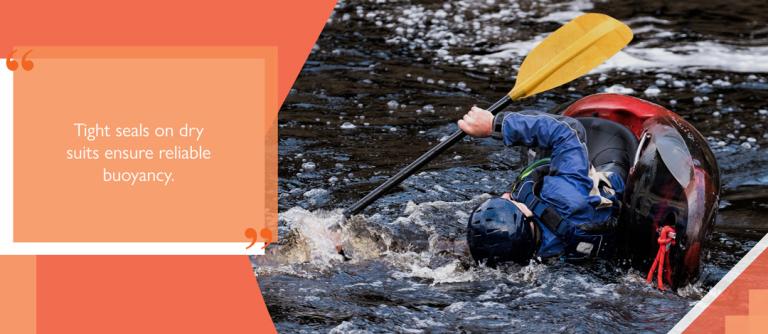
Waterproof materials eliminate the risk of flushing, and tight
seals ensure reliable buoyancy when subjected to water pressure.
Drawbacks of dry suits
Being waterproof, sweat during high intensity activities can be trapped
within a dry suit. This can become uncomfortable if you’re wearing the suit
for a while.
Dry suits alone offer little insulation. Without extra clothing, this can
leave you unprotected in cold conditions. In addition, if the waterproofing
is compromised, you can quickly lose body heat.
In the water, a loose-fitting dry suit faces greater resistance, which
affects how easily you can manoeuvre your body. This would be unsuitable
for open water swimming or surfing, where speed and agility are essential.
Deciding between a wetsuit or dry suit
The decision depends on what you will be doing in the suit. A benefit for
one activity or set of conditions may be a drawback in others.
Wetsuits are more commonly worn due to their insulating properties and
durability. Dry suits are also a more costly investment but last a long
time when properly maintained.
If you’re looking for
high-quality women’s wetsuits
, men’s wetsuits, or wetsuits for kids
to keep you safe and warm across a range of water-based activities and
conditions, Two Bare Feet has a broad selection to choose from. We also
offer
wetsuit accessories
such as hoods, gloves, and boots, to supplement your gear.