
24 May 2024
Have you ever dreamt of carving smooth lines and powerful turns on your surfboard, but the waves are flat? Enter the world of surfskating: a landlocked training ground for surfers that captures the essence of riding a wave on concrete.
This guide delves into the basics of surfskating to improve your surfing. We’ll explore what surfskates are, how they differ from regular skateboards, and the specific benefits they offer surfers.
We’ll also cover technique, how to choose the right complete surfskate board, where to practise, and most importantly, how to translate your surfskate skills to actual waves.
What is a surfskate and how is it different from a regular skateboard?
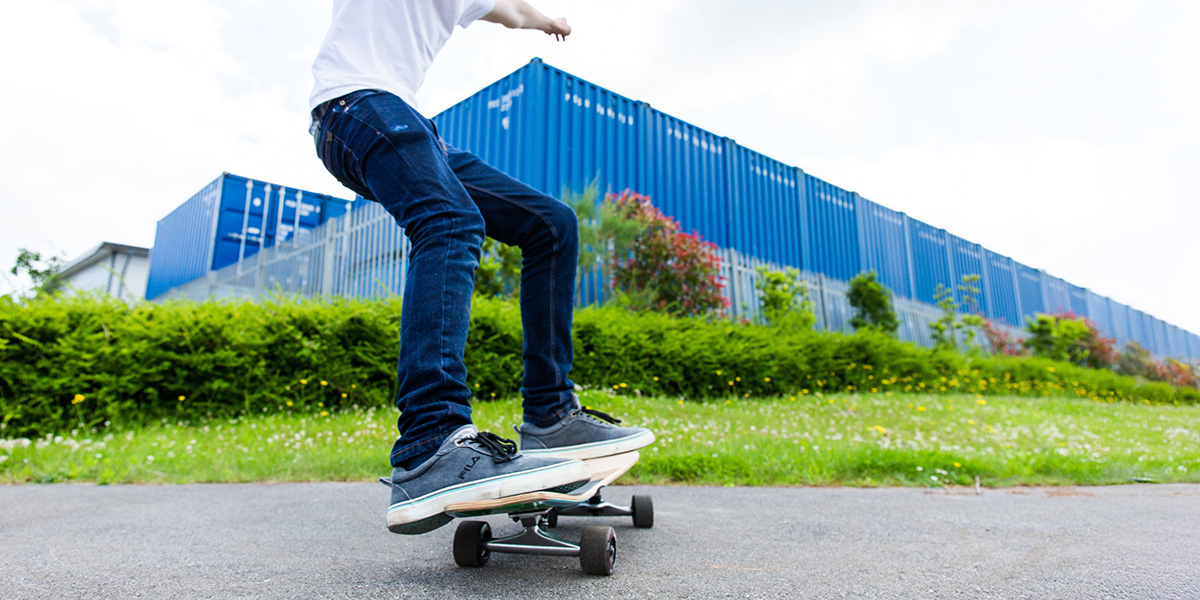
Unlike traditional skateboards with fixed axles, surfskates feature specialized trucks that allow for much sharper and more fluid turns. This innovative design mimics the feeling of gliding across a wave, allowing you to pump and generate speed without ever pushing off the ground.
Surfskate decks also tend to be longer and wider than a typical skateboard, offering more stability and foot placement options for practising surf-specific stances. These differences are key to understanding how surfskates deliver that unique surf-like feel right on the pavement.

Key differences of a surfskate board
The trucks
The heart of the surfskate lies in its specialized front truck. It uses a spring-loaded mechanism or special adapters to permit a much wider range of movement than standard skate trucks. This allows the front wheels to turn with a fluidity and range that closely mimics the carving motion on a surfboard.
The deck
Surfskate decks often resemble smaller surfboards, with wide noses, defined tails, and gentle concave for secure foot placement. This translates into stability and responsiveness that promotes a surf-like stance on the board.
The experience
While popping ollies and grinding handrails are the priority on a classic double-kick skateboard, surfskates prioritize carving, smooth flow, and the generation of speed through body movement (pumping), much like how you’d navigate a wave.
The benefits of surfskating for surfers
So, how exactly can propelling yourself on land with a surfskate translate to catching waves with a surfboard?
Muscle memory and technique refinement
Surfskating allows you to practise proper stance, weight distribution, and carving motions on land. The constant repetition helps to refine your muscle memory and technique. This ensures smoother transitions and more powerful manoeuvres when you switch to riding a surfboard.
Building core strength and balance
Surfskating is a fantastic core workout. The constant pumping motion and balance required to carve effectively engage your core muscles, strengthening them for better wave riding and overall surfing performance.
Developing wave reading and timing
The pumping motion on a surfskate replicates the feeling of generating speed by reading the wave and using your body position to your advantage. This translates beautifully to wave riding, helping you hone your skills in anticipating and reacting to the power of the wave.
Cross-training for flat days
Mother Nature doesn’t always cooperate. When the waves are flat, surfskating provides the perfect alternative to keep your surf skills sharp and your stoke level high. It’s a fantastic way to stay in surf shape and maintain base fitness during those wave-less stretches.
Translation of key manoeuvres
The beauty of surfskating lies in how directly its manoeuvres translate to surfing. Here are a few key moves you can practise on your surfskate board that will have you dominating the waves in no time:
Bottom turns
Mastering bottom turns is essential for initiating manoeuvres and generating speed on a wave. Surfskating allows you to practise these powerful leg-driven carves, building the strength and technique needed to execute them flawlessly on your surfboard.
Cutbacks
Snappy and controlled cutbacks are a surfer’s secret weapon for navigating the wave face and performing stylish manoeuvres. Surfskating allows you to refine these sharp turns on land, making them second nature when you’re riding a wave.
Pumping
The pumping motion on a surfskate perfectly mimics the way you pump your surfboard to gain speed and flow down the line. With consistent practice on your surfskate, you’ll develop an efficient pumping technique that will have you gliding effortlessly across waves.
Choosing the right surfskate
With a variety of surfskate options available, selecting the right board can seem daunting. Here are some key considerations to make sure you choose the perfect board to take your surfing to the next level.
Matching board length with surf style
Generally, longer surfskate decks (around 40 inches) with a longer wheelbase provide more stability and mimic the feel of a longboard, making them ideal for beginners or those who prefer a cruising style of surfing.
Shorter surfskates (around 30-32 inches) offer increased agility and manoeuvrability, ideal for practising sharp turns and tight surfing manoeuvres.
In addition, bear in mind that height and weight can also be a factor. Broadly speaking, a longer wheelbase may be better if you have a larger build. However, this won’t apply to everyone. Always check that the deck is compatible with your typical surfing stance and style.
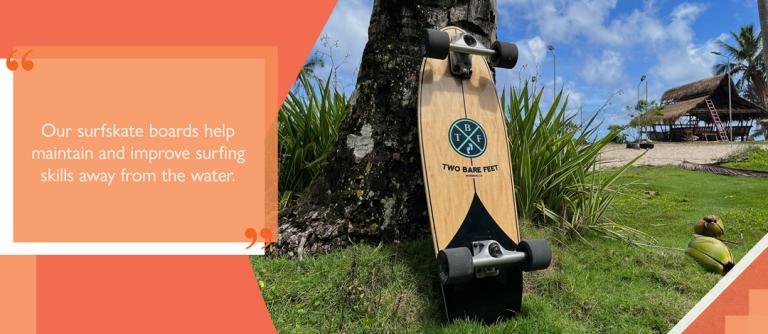
Here at Two Bare Feet, we offer a range of complete surfskate boards to suit differing surfing styles and experience levels. Our surfskate collection is designed to replicate the surfing experience on land, making them excellent tools for maintaining and improving your surfing skills when the ocean is calm.
From our easy-to-control and responsive 40-inch swallow-tailed Palma series to our snappy, compact, and practical 30-inch decks, our surfskate boards come in different lengths, shapes, and configurations. This ensures a perfect match for everyone, regardless of experience.
Essential components
Two Bare Feet surfskate boards come with a standard aluminium rear truck and a surfskate-style aluminium front truck, which provides a good balance of stability and responsiveness and makes it a versatile choice for most riders.
Our complete surfskate setups also come equipped with 65mm/78A wheels that provide the ideal balance of grip, shock absorption, and rolling speed for a smooth ride designed for plenty of carving.
If you fancy customising your ride, you can opt to fit your board with our colourful selection of Sessions 78A 70mm longboard wheels. Soft and flexible, they’ll absorb impacts and provide the excellent traction you need.
Where to practise surfskating
The beauty of surfskating is that it can be done almost anywhere with a smooth, paved surface. Here are a few ideal locations to hone your skills:
Smooth pavement and gentle slopes
Look for empty carparks, sidewalks, or quiet paths with smooth pavement. Gentle slopes can add an extra dimension to your practice, allowing you to simulate the feeling of riding down a wave face.
Skateparks and bowls
Skateparks offer a variety of ramps, bowls, and other features perfect for practising advanced surfskate manoeuvres. Just remember to follow skatepark etiquette and prioritize safety when riding alongside traditional skateboarders.
Simulating waves with inclines
Find a gentle incline and practise pumping and carving down the slope. This will help you develop the technique needed to generate speed and flow when riding an actual wave.
Managing surfskate skill progression
Before attempting advanced moves, it’s essential to nail down the fundamentals of surfskating:
Pumping and speed generation
Practise generating speed by pumping the board in a smooth, continuous motion. Focus on coordinating your upper and lower body movements for maximum efficiency. This is the foundation for flow on a surfskate and wave.
Frontside and backside carving
Practise carving aggressive turns in both directions (frontside and backside) to improve your balance and ability to control the board on steeper inclines.
Beyond the basics
Once you’re comfortable carving, add in sharp snaps and cutbacks to your routine to mimic those surfing power moves. Feeling extra confident? Start filming yourself to analyze your form and spot improvement areas.

Safety considerations for surfskating
As with any activity, safety is paramount when surfskating. Here are some key considerations:
- Protective gear: There’s no such thing as a soft landing when practising on hard ground. A good quality skateboard helmet and pads can significantly reduce the risk of injury in the event of a fall.
- Finding the right location: Choose a smooth, uncrowded location free from obstacles or traffic.
- Starting slow: Don’t try to overdo it, especially if you’re new to surfskating. Start slow, gradually build your confidence, and progress at your own pace.
Make surfing mastery happen with Two Bare Feet
Ready to shred the waves and carve like a pro? Here at Two Bare Feet, we’re passionate about helping surfers of all levels reach their full potential. Whether you’re a seasoned surfer looking to maintain your skills during flat spells or a beginner yearning to experience the feeling of surfing on land, Two Bare Feet has the perfect surfskate board for you.
Need to ensure you find the perfect setup to take your surfing to the next level? Our friendly and knowledgeable team is always happy to answer any questions you may have and help you choose the ideal surfskate board for your goals.
Get in touch today: drop us a message or call on 01803554695.