12 May 2022
There’s nothing like heading out to the water to clear your head. Having a
plan for your trip, and being assured of both your skills and the kit you
need, will help you to have an enjoyable paddleboarding session.
Getting your paddleboarding skills up to scratch
Swimming as an essential technique
Being a competent swimmer is going to help. This is important wherever you
intend to paddle.
Even if you are in your element when submerged,
wearing a personal floatation device (PFD) will reduce the chances of running into difficulties if you capsize
your board. Keeping a healthy respect for the danger deep water represents
will prime you to be ready for any eventuality.
Practise falling and getting back on
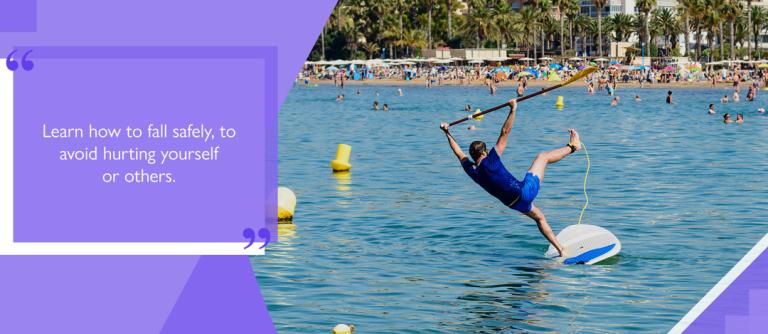
Getting wet comes with the territory – you’re going to fall in sooner or
later. Learn how to fall safely, away from the board, to avoid damaging it
or hurting yourself or others. You’ll save body heat and energy if you can
avoid being stuck in cold water for too long.
Draw on the experience of others
It may be worthwhile getting professional lessons, or asking an experienced
friend to show you the ropes – from efficient paddle strokes to balancing
and turning. Advice about correct waterway etiquette will also come in
handy when
navigating busy waters.
Exercising muscles
When you’re on dry land, you can condition muscles used in paddleboarding
to improve your strength and fitness. Paddling requires repeated motions
using your arms, shoulders, and back muscles, while strong core and leg
muscles help with balance.
Warming up these muscle groups before a session will make injury less
likely and let your body work efficiently.
Check the conditions
You should plan your sessions in advance, around the conditions you’re
likely to encounter.
Use the weather forecast
to dress appropriately, and check tide times to avoid the
possibility of being stranded or paddling against the current in tidal
waters.
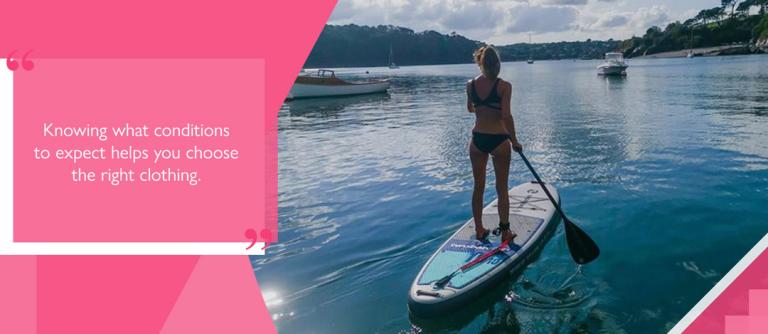
Water temperature should be considered when making clothing choices. Even
on hot days, the water may be considerably cooler than the air. Cold water
submersion can cause shock and quickly saps body heat.
You should also be wary of sun exposure. Cover exposed skin with
marine-safe SPF and wear a hat and sunglasses to protect from harsh
sunlight. Secure both with straps to avoid losing them.
Get the right gear for paddle boarding
Wetsuits and protective clothing
Knowing what conditions to expect helps you choose the right wetsuit.
Thicker wetsuits keep you warm in cold water; a thinner wetsuit offers more
flexibility.
Thermal rash vests or other underlayers can be
worn beneath a wetsuit
for extra insulation, and can be removed if you heat up.
Different paddleboards for different activities
Choosing a paddleboard that suits the activity you intend to undertake is
as important as adequate clothing.
If you intend to use your paddleboard for SUP surfing, a shorter board that
is easier to manoeuvre will be better suited. If you prefer to cover long
distances, a touring SUP will track, build speed, and glide better on flat
water.
SUP equipment and accessories
Aside from your paddleboard, check and equip the following before heading
out:
-
Paddleboard leash: for keeping hold of your equipment in open water and/or keeping you
attached to your board, so you don’t lose it. -
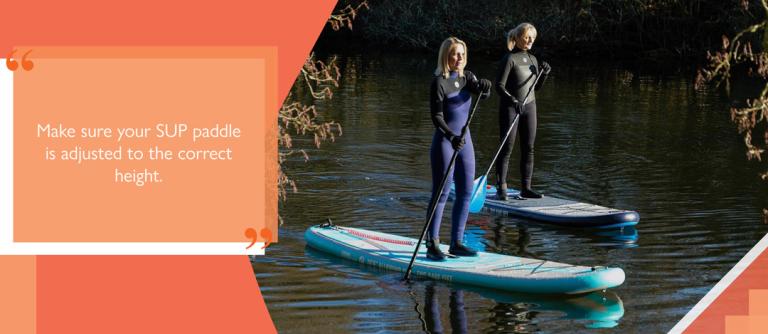
SUP paddle: make sure it’s adjusted to the correct height, so less energy is
required to generate power over long distances. -
Puncture repair kit: while a puncture is unlikely when using a high-quality inflatable
SUP, it’s better to be ready for the unexpected. Bring a hand pump
along as well. -
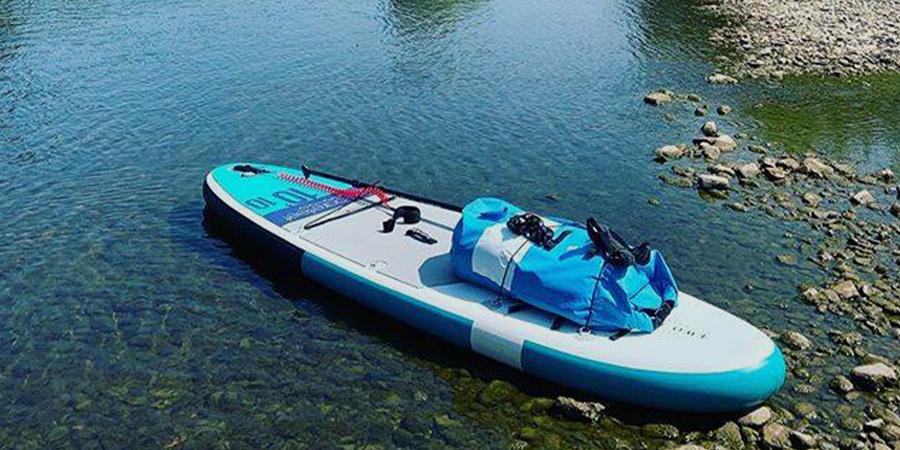
Dry bag: you’ll need a waterproof holdall for your tools, water bottle,
snacks, and sun cream. Consider bringing a mobile phone, in case of
emergency.
Looking for more advice on good practice when planning a SUP excursion? Our blog archive contains a wealth of practical tips and facts you can use, so you can
ensure your next paddleboarding trip is a fun, safe, and comfortable
experience.