27 May 2021
Paddleboard fins help create and distribute drag to either side as they move through a body of water. However, this has the effect of reducing the amount of lateral drift as your weight shifts on the board, keeping straight-line travel (tracking) steady.
Meanwhile, the thin front wedge of a fin cuts through the resistance of the water. This improves tracking, stability, and speed, and minimises the energy expended with each paddle stroke.
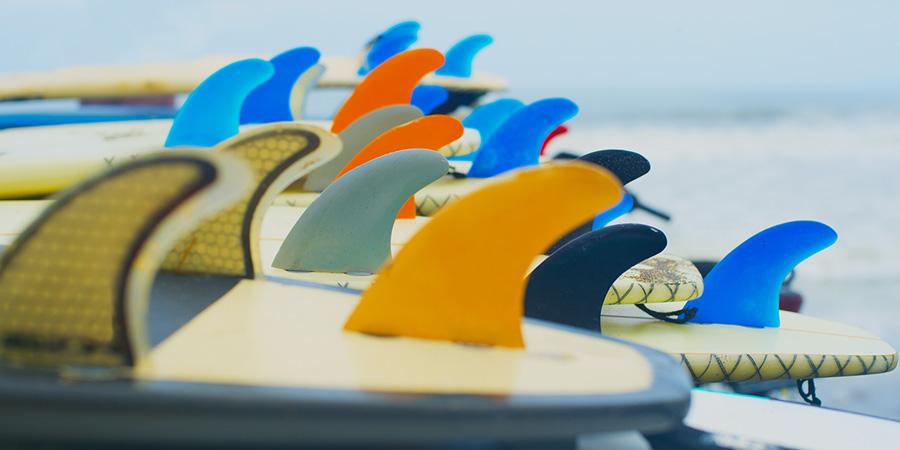
Inflatable SUP fins vary in configuration, from one to four fins. Broadly speaking, the more fins, the more stable the ride. Each fin increases the surface area of board in contact with the water.
Single fin configuration
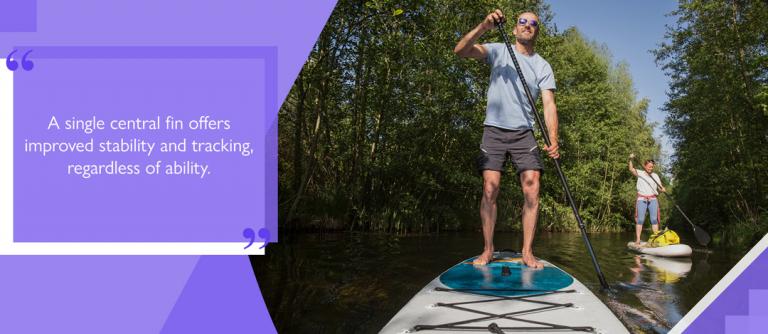
A single central fin offers improved stability and tracking, regardless of ability. The bigger the fin, the more force exerted on the water, which translates into better stability.
Some boards come with the option for adjustable fin placement. The fin is slotted into a ‘fin box’, located on the underside, near the tail of the board.
Where the fin is positioned can impact on board manoeuvrability. Bringing the central fin forward in the box allows for easier turning. This is useful for surfing, but makes the board slower and diminishes straight-line control.
Moving the fin further back in the box is better for speed, stability, and tracking. This is the preferred placement for touring or more sedate paddling.
A fin placed centrally in the fin box offers a good mix of control, turning and tracking. Most all-rounder or non-adjustable boards will place their fins centrally or slightly further back.
Two-fin configuration
Smaller two-fin setups became popular when SUPs began to decrease in length. However, this configuration is often only used in specific settings.
In rough waters, big fins create drag and amplify the effects of turbulence. Two smaller fins improve balance by holding on to the water without adding too much surface area.
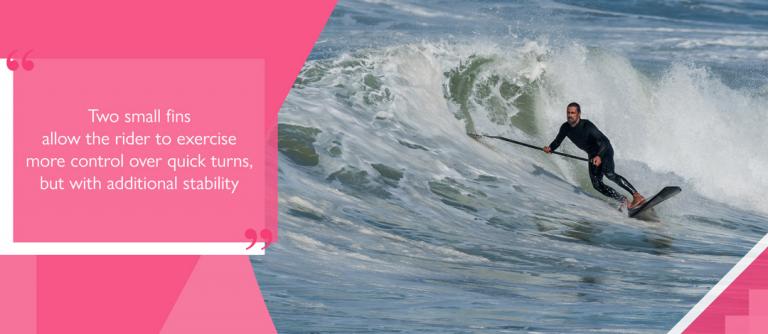
In SUP surfing, two small fins allow the rider to exercise more control over quick turns, but with additional stability not offered by a finless ride.
Three-fin configuration
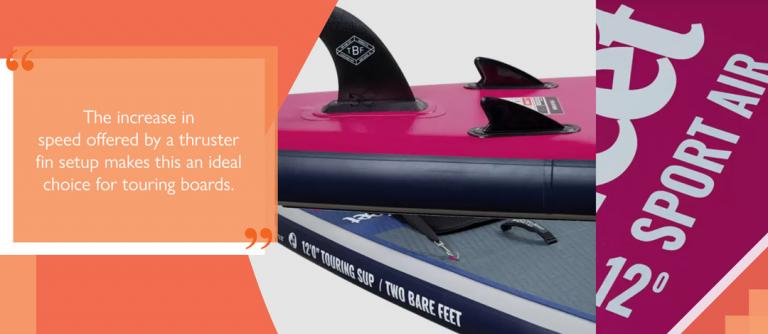
One central fin flanked by two side fins is known as a 2+1 fin set up. It is often referred to as a ‘thruster’ configuration to emphasise how much speed and power can be gained using this arrangement. The increase in speed, compared to a single fin, makes thruster fin set ups ideal for touring.
Side fins, often called sidebites due to their small size, use water displaced by their own drag to plug the vortex created by drag from the central fin. This reduces resistance, providing a smoother surface for the board to glide over. The result is an increase in speed and improved tracking.
Side fins boost board control by reducing side drag on the board, balancing out the reduction in manoeuvrability a lone central fin may add due to its positioning.
Combining paddling on one side of the board with the water physics of two side fins also helps to keep speed up while turning. This makes for better manoeuvrability over other set ups.
Four-fin configuration
Four-fin setups are favoured by pro SUP surfers. The configuration makes boards harder to control. But as surfing requires high manoeuvrability and stability, four smaller fins can work as they make turns and quick changes of direction easier. It’s also possible to gain speed, as there is less resistance.
With four fins, you can better capitalise on drive from waves or your own paddling. However, larger fins help to hold onto waves better and keep a stable line.
Optimising your SUP performance
Need more practical ideas to help maximise enjoyment of your paddle boarding experience? Our blog contains a variety of useful posts to help improve your time out on the water. For example, we offer advice on essential SUP accessories such as how to choose a SUP paddle, and deciding on what to wear when paddleboarding.