11 February 2022
Ski goggles protect eyes from fatigue, snow blindness, and damage from UV
rays – which can be stronger at high altitudes. They also insulate and
protect from harsh weather such as blizzards, high winds, and low
temperatures.
Whether you’re looking to complete your ski wardrobe or need them as
an essential part of your snowboarding kit
, ski goggles offer the protection your eyes need in all conditions.
Protection offered by ski goggles
Ski goggles must protect your eyes from sun damage and weather conditions.
100% protection from harmful UVA, UVB and UVC rays should be standard, no
matter the tint or type of lens.
Ski goggle lenses
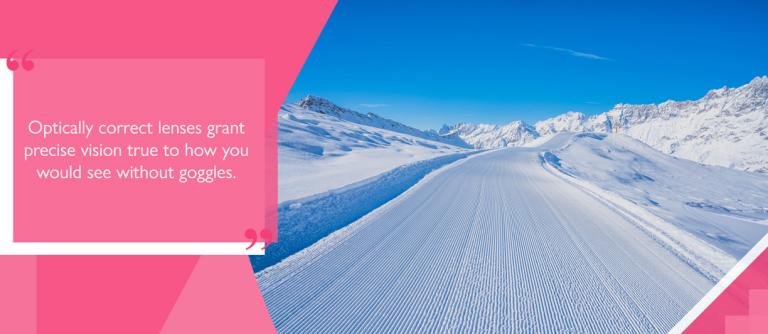
Optically correct lenses
grant precise vision, true to how you would see without goggles. With no
visual distortion, they provide the clearest view.
Spherical lenses
prevent peripheral vision distortion, providing a better sense of
positioning on the slopes and awareness of others around you.
Mirrored lenses
reduce glare and can be combined with different coloured tints. They’re
preferable to polarised lenses, which help reduce glare but can
make icy patches or shadows from bumps and ridges harder to spot.
Flat lenses
still afford clear forward vision but can distort in the periphery. For
this reason, they tend to cost less.
Different ski goggle tints
The amount of light allowed through goggles is measured as Visible Light Transmission (VLT). Darker tints have lower
VLT and vice versa.
Low VLT
stops your eyes becoming fatigued in bright conditions, while high VLT allows better colour and depth perception in
low-light conditions.
Some goggles have interchangeable lenses, allowing you to match the lenses
to changing conditions.
How ski goggle colour tints work for different conditions
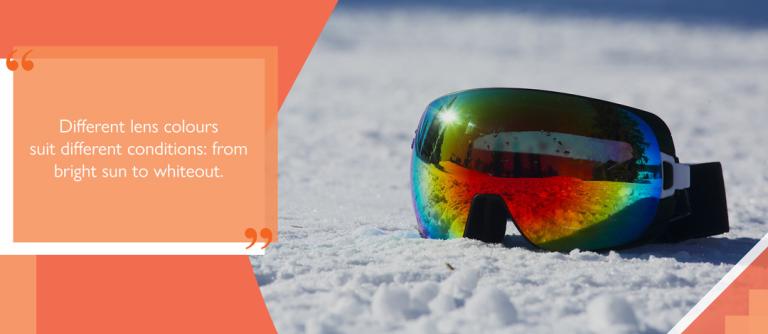
Different lens colours suit different conditions: from bright sun to
whiteout.
- • Yellow, gold, amber – filters blue light for better shadow perception; good for low light and changeable days
- • Copper, orange, rose – good all-rounders for changeable weather
- • Green, blue, grey – increases contrast and protects from bright sunshine
- • Clear – allows in the most amount of light, and provides true colours for optimal vision
Overcast skies and snow-whipping winds can create disorientating whiteout
conditions, known as flat light. The best goggles for flat
light use bright lens tints such as pink or orange to help create contrast, making hazard perception
easier.
Maintaining clear vision
Vents on ski goggles facilitate air flow, keeping your face cool and dry,
and allowing moisture out. This maintains a moderate temperature, prevents
clamminess, and keeps goggles from steaming up. As movement helps air flow,
stopping while hot may cause fogging.
Most goggles have two lenses with an air pocket between them. This
insulating barrier prevents the inner lens from freezing and keeps your
face warm.
Ski goggle frames
Most frames are made from shatter- and impact-resistant plastic which
protects your eyes from damage in case of collision. Flexible frames and
lenses are less likely to break or pop out in a hard impact.
Frame size can affect your field of view. Small frames may infringe on
peripheral vision, potentially blocking out hazards or other slope users
from sight.
Goggle frame padding
Foam or silicone moulding makes goggles more comfortable and likely to stay
in place. The type of material will dictate how well they mould to your
face, while the number of layers will affect how comfortable the fit is.
Adjustable and helmet-compatible goggles
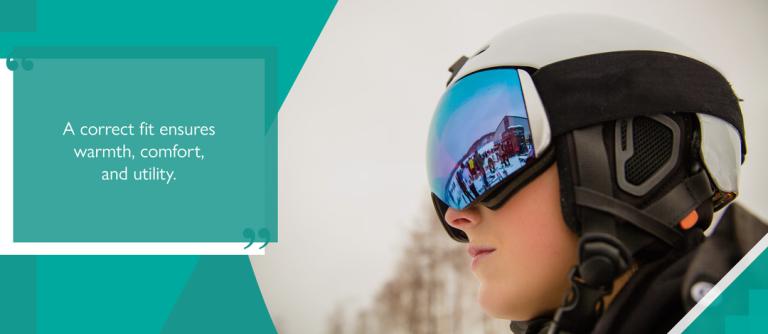
As with other types of skiwear, a correct fit ensures warmth, comfort, and utility. With ski goggles, the
straps should hold in position once adjusted – remember: loose goggles can
be hazardous.
For longer sessions, wide bands are often more comfortable than narrow
ones. This is because pressure is spread across the head. Under a helmet,
flexible buckles dig in less than hard plastic.
Helmet-compatible ski goggles
will clip securely into your helmet for full protection. Frame clips allow
some movement for optimum fit and comfort. The fit should always be checked
before heading out.
Not all goggles will be attachable but should still fit beneath a helmet.
However, they may be slightly less comfortable and secure.
Ski goggle care
After a day on the slopes, your ski goggles should be hung somewhere warm
and well-ventilated to allow moisture to dry and prevent damp.
Goggles should be stored out of direct sunlight or excessive heat to avoid
warping or fading. Keep lenses in their protective cases or wrapped in
cloth to minimise scratching.
Choosing high-quality ski goggles and lenses
Available in different sizes for peak comfort and performance, all Two Bare Feet
snow goggles
are stylish, comfortable and 100% UV resistant.
For our complete range of professional-grade skiwear,
our snow section offers a comprehensive collection of equipment and
clothing
you’ll need to stay safe and warm out on the slope.